
Service area
Renfrewshire
Renfrewshire and the lower Clyde · enter your postcode and we’ll confirm availability
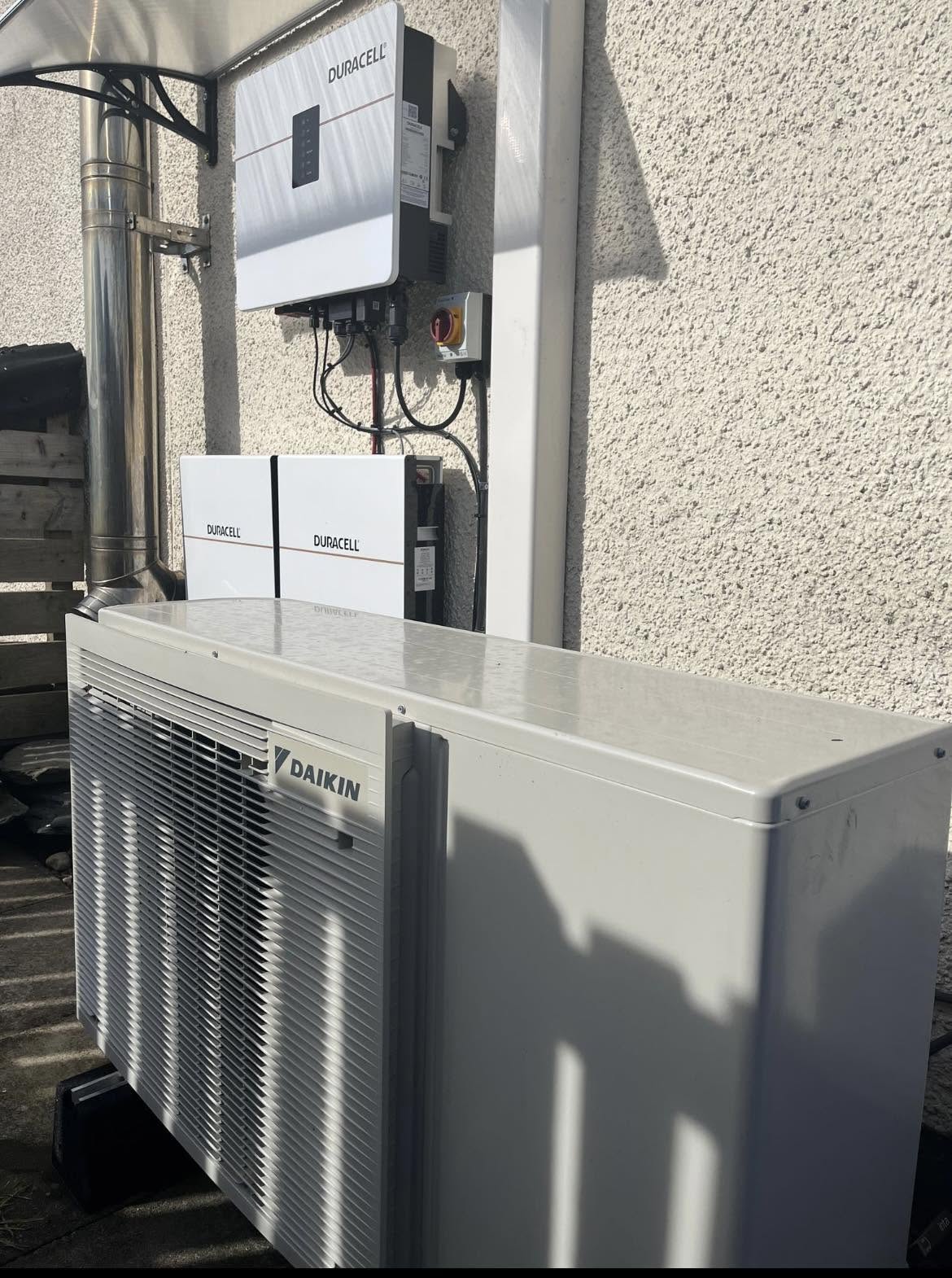
Designed for your property
What we’ll consider for your Renfrewshire property
Renfrewshire’s housing ranges from traditional terraces and sandstone properties to post-war neighbourhoods, modern estates and larger homes towards the rural edge. Boundary distances, prevailing weather and the route to internal equipment can vary even within the same street.
For heat pump radiators and hot-water cylinders, FLO uses a heat-loss-led approach to decide whether existing emitters can be retained, where equipment can sit and what changes would make the system comfortable and efficient. Funding guidance can remain part of the same enquiry if it is relevant.
Renfrewshire radiator and hot-water planning for mixed housing
Use the Renfrewshire home’s actual rooms, routes and routines to define the upgrade
Renfrewshire contains compact traditional properties, post-war houses, modern estates, rural-edge homes and flats with shared-building questions. Those contexts change both the radiator survey and the search for suitable hot-water storage. A deep garden does not solve indoor pipework; a generous utility room does not prove the existing radiators can work at the intended system temperature. Renfrewshire Council lists eight conservation areas and notes additional permitted-development restrictions in most of them, so the outdoor-unit position also belongs in the project assessment. FLO can keep that planning context separate from a measured indoor design: calculate room demand, catalogue radiators, understand circuit layout and size stored water around your household. Your proposal will show where a change is necessary, where existing equipment appears reusable and which details still need confirmation before installation.
Stone rooms and later additions should not share one shortcut
A traditional Renfrewshire property can pair original stone rooms with a modern insulated rear extension. Their floor areas may be similar while their heat losses and useful radiator positions are not. FLO can record exposed walls, glazing, room geometry and verified insulation separately, then compare existing emitter output with the required load at the design conditions. The extension may have underfloor heating, a designer radiator or a separate circuit that changes the hydraulic plan; the original rooms may contain large emitters that remain useful. This evidence prevents both extremes—retaining everything without calculation or replacing everything because the house is old. If the property sits in Castlehead, Paisley Town Centre, Houston, Kilbarchan, Lochwinnoch, Ranfurly or another designated area, that fact informs the wider project but does not substitute for these room-level decisions.
Choose a cylinder position for connection, access and daily life
A Renfrewshire family home may offer several apparent cylinder locations: an upstairs cupboard, utility room, garage or part of a larger plant area. The best option must accommodate the vessel and service zone while limiting disruptive routes and preserving the household space that matters. FLO can measure openings and access, note the distance to bathrooms and heat source, and record how the property is occupied. Capacity follows actual hot-water patterns, not simply the number of bedrooms or the size of the garden. Where a current cylinder exists, its location is a starting point, not proof that it can be reused with the new design. The proposal can explain why one position has been selected and what joinery, pipework or distribution consequences are included, allowing the customer to evaluate the practical impact before agreeing to work.
A coherent circuit matters more than a collection of larger radiators
Adding emitter surface area only helps when the distribution system can deliver the required flow and the controls let rooms operate together sensibly. Renfrewshire houses altered over decades can contain capped branches, separate zones, mixed pipe sizes and thermostatic valves from different upgrades. FLO can trace accessible sections, identify uncertain routes, assess pump and balancing implications, and set out the intended control logic. Bedrooms, open-plan areas and infrequently used rooms may have different comfort goals, but the system still needs a stable operating strategy rather than repeated boiler-style on-off bursts. The radiator schedule can therefore include output and hydraulic reasoning together. This is especially useful when comparing quotes: a lower list of replacements is not automatically better, and a longer list is not proof of more careful design unless the need for each item is stated.
Local planning information
Heritage controls differ across Renfrewshire neighbourhoods
For radiators and hot water, local building types help identify likely construction, access and plant-space questions; final emitter output and cylinder duty still come from measurements and household demand.
Request a £0 whole-heating-system survey and written quote in Renfrewshire
Share the property and present-system details so FLO can review room output, selective upgrades, pipework and cylinder recovery as one heating system. FLO will confirm service availability for the Renfrewshire postcode.
What this Renfrewshire service includes
- Room-by-room radiator output checks
- Selective emitter resizing
- Pipework and flow-rate assessment
- Cylinder capacity and recovery review
- Plant-space and access planning
- Controls and balancing at handover
What the survey will check locally
FLO uses calculated heat demand and emitter performance to decide what can stay and what should change. The design also covers hot-water recovery, electrical requirements and controls so the finished system is not reduced to an outdoor-unit specification.
Compact gardens require a disciplined siting discussion; larger plots can introduce unnecessarily long pipe runs if appearance is prioritised without considering efficiency and maintenance. The survey weighs those trade-offs openly.
What happens next
- 01
Measure room demand
Use the heat-loss calculation to establish the output required from each emitter.
- 02
Check existing equipment
Compare radiator, pipework and cylinder performance with the proposed heat-pump design.
- 03
Specify necessary changes
Retain suitable components and clearly identify only the upgrades the system requires.
- 04
Balance and explain
Commission the distribution system and show the homeowner how the controls should be used.
Related local services
Other heat pump help in Renfrewshire
Nearby areas
FLO welcomes enquiries from Paisley, Renfrew, Johnstone, Bishopton, Bridge of Weir, Erskine and surrounding communities. The property postcode is used to confirm availability.
Answers that may help you decide
Questions people ask
Does FLO provide heat pump radiators and hot-water cylinders in Renfrewshire?+
FLO accepts enquiries for heat pump radiators and hot-water cylinders in Renfrewshire. Availability is confirmed using the postcode, system details and project scope.
What should I include in a Renfrewshire enquiry?+
Provide the property type, current heating, postcode and contact details. Existing system owners should also include the make, model, age and any symptoms or fault codes.
Can funding be considered with a Renfrewshire quote?+
Yes. Ask for funding guidance within the same FLO enquiry so it remains connected to the actual property and proposed system.
Will a small garden prevent installation?+
Not necessarily. The unit still needs compliant airflow, sound, drainage and service clearances, which a site assessment can test.
Do heat pumps need oversized radiators?+
They often need more emitter output than a high-temperature boiler system, but the requirement is calculated room by room. Not every radiator automatically needs replacement.
Can I keep my existing hot-water cylinder?+
Some cylinders may not have a suitable heat-exchanger area or recovery performance. The design should check this along with available space and household demand.