
Service area
Renfrewshire
Renfrewshire and the lower Clyde · enter your postcode and we’ll confirm availability
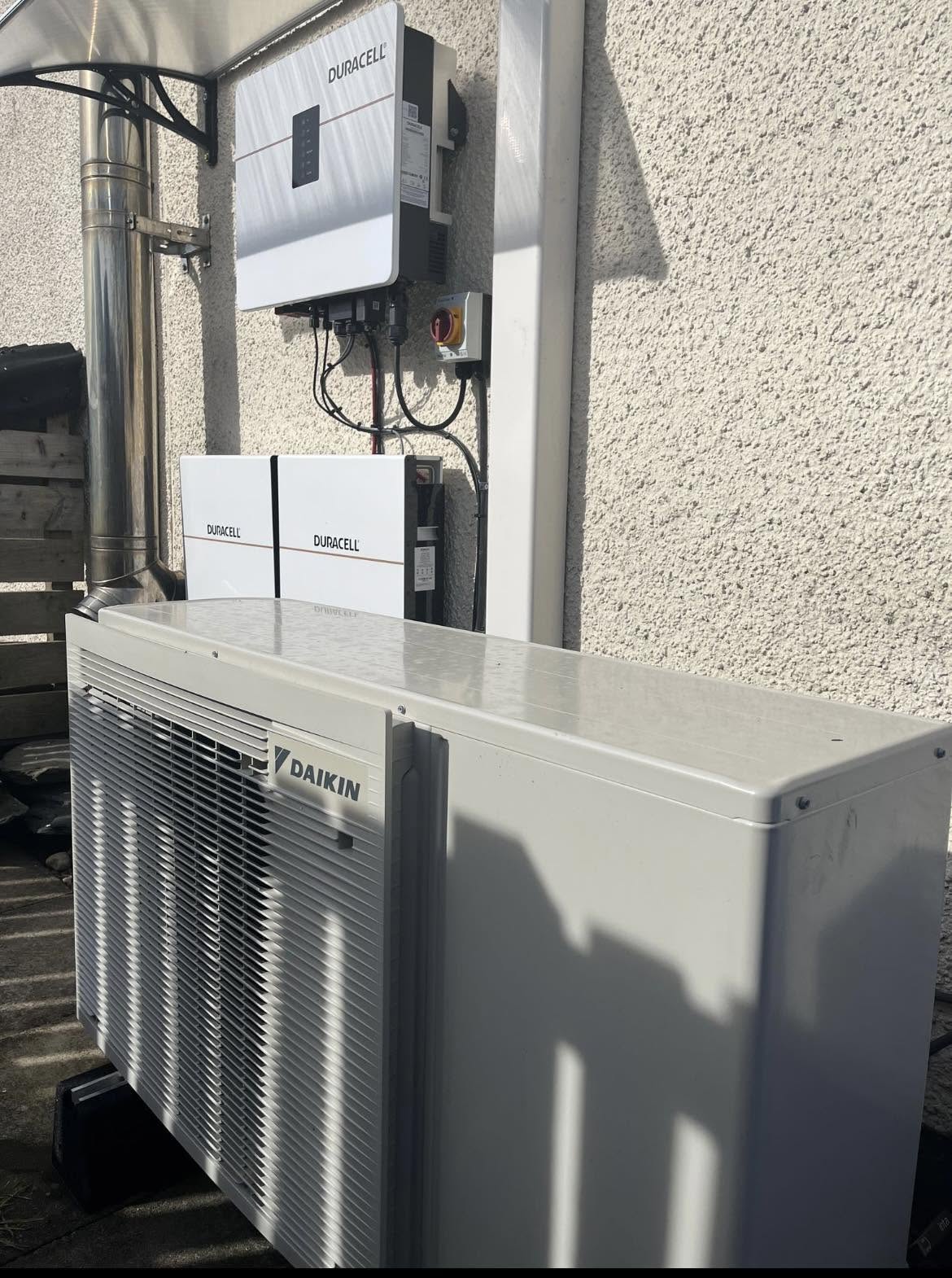
Designed for your property
What we’ll consider for your Renfrewshire property
Renfrewshire’s housing ranges from traditional terraces and sandstone properties to post-war neighbourhoods, modern estates and larger homes towards the rural edge. Boundary distances, prevailing weather and the route to internal equipment can vary even within the same street.
For air source heat pump installation, FLO uses a heat-loss-led approach to decide whether existing emitters can be retained, where equipment can sit and what changes would make the system comfortable and efficient. Funding guidance can remain part of the same enquiry if it is relevant.
Installation design west of Glasgow
Balance Renfrewshire garden space with a short, serviceable system route
Renfrewshire heat-pump projects range from compact traditional property and post-war housing to modern estates and larger homes near the rural edge. Outdoor space varies just as widely: a small enclosed garden creates close boundary questions, while a long mature plot can tempt an unnecessarily remote unit position. FLO designs the heating system and physical route together, using calculated heat demand to decide what emitters can stay and matching hot-water storage to the household. Electrical work, drainage, controls and commissioning belong in the same scope. Renfrewshire Council identifies eight conservation areas and notes additional permitted-development restrictions in most of them, making an exact-address check important where the proposed installation touches a designated setting.
A distant garden position is not automatically discreet design
Moving a unit far from the house may reduce its immediate visual presence, but it can introduce longer pipework, more ground work, greater heat loss and awkward maintenance access. FLO can compare a nearer side or rear position against the remote alternative using airflow, sound, drainage and the route indoors. Screening and planting should preserve manufacturer clearances throughout the year. The objective is not the least visible location at any cost; it is the most balanced position for the equipment’s operating life.
Traditional and post-war homes need different upgrades
Stone walls, cavity construction, replacement windows and later loft or extension work create different room loads. The installation schedule should show the heat-loss assumptions and radiator outputs used, rather than assigning a single upgrade package to the whole area. Where an existing radiator is adequate at the target water temperature it can remain; where pipework or an emitter constrains a room, that change should be explicit. This keeps disruption connected to technical need instead of age alone.
Designation can alter the external-work route
Castlehead, Paisley Town Centre, Houston, Kilbarchan, Lochwinnoch and Ranfurly are among Renfrewshire’s conservation areas. The council says all but Greenlaw have additional legal restrictions removing some permitted-development rights. That does not rule out a heat pump, but it makes the property map and proposed position relevant before installation. A non-designated address still needs normal boundary, sound and airflow checks; conservation status is one layer of the complete siting decision at that address.
Local planning information
Heritage controls differ across Renfrewshire neighbourhoods
For an installation proposal, this prompts an address-level check before FLO fixes the outdoor position, pipe route and complete scope.
Request a £0 home survey and written heat-pump quote in Renfrewshire
Share the property basics and what you want to change. We’ll contact you to arrange the right survey and prepare a clear written quote for the complete system. FLO will confirm service availability for the Renfrewshire postcode.
What this Renfrewshire service includes
- Room-by-room heat-loss assessment
- Equipment sizing and hydraulic design
- Radiator, pipework and cylinder review
- Outdoor-unit positioning and access checks
- Installation, commissioning and controls handover
- Documentation, servicing and aftercare
What the survey will check locally
FLO uses calculated heat demand and emitter performance to decide what can stay and what should change. The design also covers hot-water recovery, electrical requirements and controls so the finished system is not reduced to an outdoor-unit specification.
Compact gardens require a disciplined siting discussion; larger plots can introduce unnecessarily long pipe runs if appearance is prioritised without considering efficiency and maintenance. The survey weighs those trade-offs openly.
What happens next
- 01
Property enquiry
Share the postcode, property type, current heating and contact details so the team can contact you about the right survey.
- 02
Home assessment
FLO checks heat loss, emitters, hot water, electrics, access, pipe routes and the proposed outdoor location.
- 03
Designed proposal
The equipment, system changes, assumptions, scope, price and available funding route are set out before you decide.
- 04
Installation and handover
The system is installed, tested and commissioned, followed by clear controls guidance and ongoing support.
Related local services
Other heat pump help in Renfrewshire
Nearby areas
FLO welcomes enquiries from Paisley, Renfrew, Johnstone, Bishopton, Bridge of Weir, Erskine and surrounding communities. The property postcode is used to confirm availability.
Answers that may help you decide
Questions people ask
Does FLO provide air source heat pump installation in Renfrewshire?+
FLO accepts enquiries for air source heat pump installation in Renfrewshire. Availability is confirmed using the postcode, system details and project scope.
What should I include in a Renfrewshire enquiry?+
Provide the property type, current heating, postcode and contact details. Existing system owners should also include the make, model, age and any symptoms or fault codes.
Can funding be considered with a Renfrewshire quote?+
Yes. Ask for funding guidance within the same FLO enquiry so it remains connected to the actual property and proposed system.
Will a small garden prevent installation?+
Not necessarily. The unit still needs compliant airflow, sound, drainage and service clearances, which a site assessment can test.
How long does an installation take?+
The programme depends on the system changes required. Many straightforward projects take several days, while complex radiator, cylinder, electrical or pipework work can take longer. Your proposal will set out the expected programme.
Will every radiator need replacing?+
Not necessarily. Each room should be checked against the calculated heat loss and proposed flow temperature. Some emitters may already be suitable while others may need resizing.