
Service area
Renfrewshire
Renfrewshire and the lower Clyde · enter your postcode and we’ll confirm availability
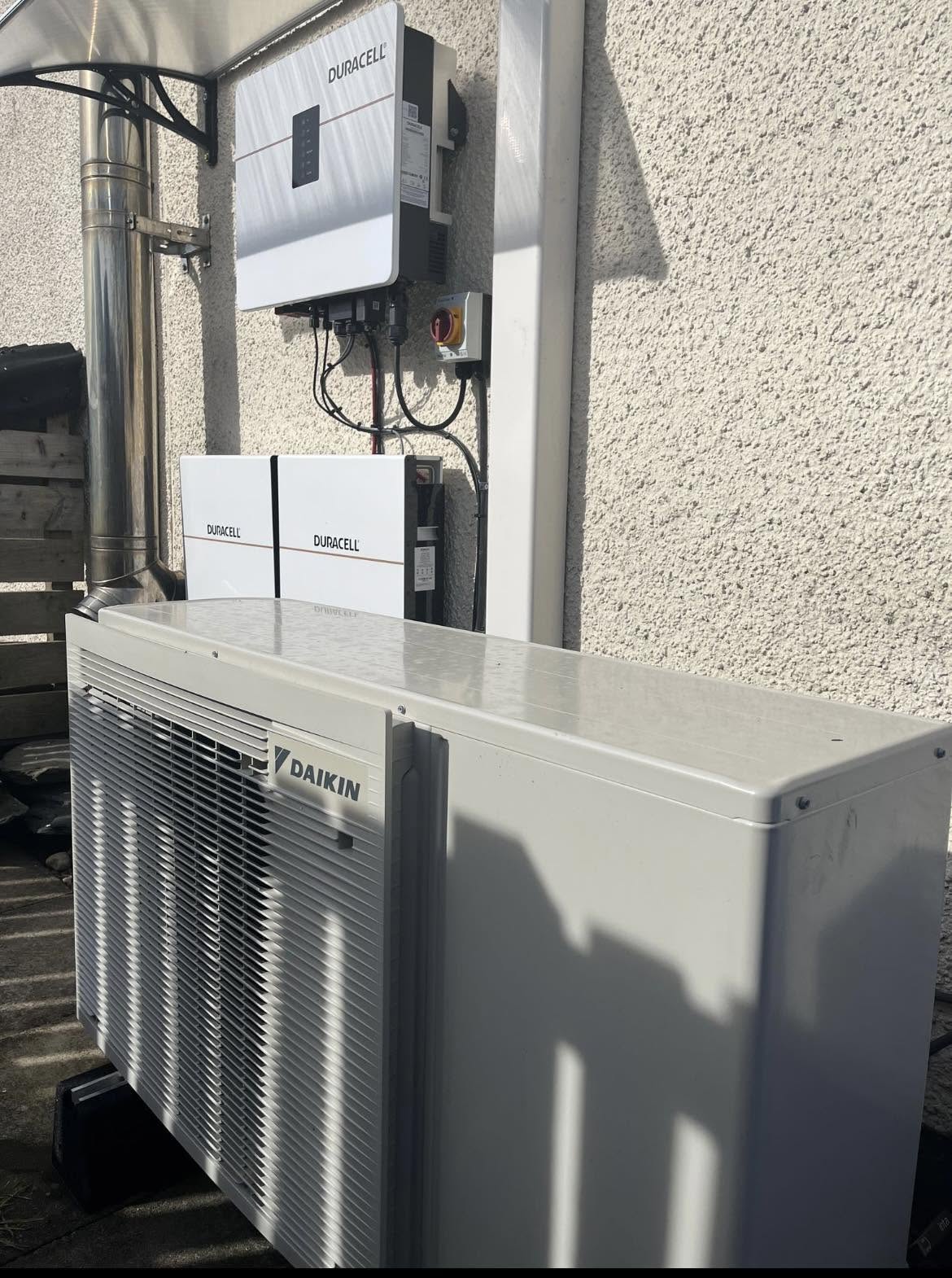
Designed for your property
What we’ll consider for your Renfrewshire property
Renfrewshire’s housing ranges from traditional terraces and sandstone properties to post-war neighbourhoods, modern estates and larger homes towards the rural edge. Boundary distances, prevailing weather and the route to internal equipment can vary even within the same street.
For heat pump system design, FLO uses a heat-loss-led approach to decide whether existing emitters can be retained, where equipment can sit and what changes would make the system comfortable and efficient. Funding guidance can remain part of the same enquiry if it is relevant.
Renfrewshire distribution and siting design
Balance an efficient water temperature with a practical Renfrewshire equipment route
Renfrewshire projects can range from compact traditional properties and post-war housing to modern estates and larger rural-edge homes with mature plots. That variety changes both sides of system design: how much heat individual rooms need and where outdoor and indoor equipment can live. FLO starts with measured geometry, fabric evidence and the existing circuit, then develops an emitter schedule, design water temperature and domestic hot-water plan. Electricity, controls, sound, drainage and service access are coordinated rather than appended later. Renfrewshire Council identifies eight conservation areas and additional restrictions in most of them, so heritage status is checked from the address where it may affect external work, not presumed from the town name.
Find the limiting room before choosing capacity
A traditional stone room, exposed gable bedroom and modern rear addition may each respond differently at the same water temperature. The whole-home peak load alone cannot show whether one radiator needs an impractical temperature. FLO calculates room demand, reviews installed emitters and tests output at candidate flow and return conditions. The chosen design point should balance comfort, available surface area and equipment performance without relying on a high-temperature headline as a substitute for distribution work. Where an emitter or branch constrains the result, the schedule names it and sets out the proposed change. This lets the final unit selection follow a coherent system temperature rather than being oversized to compensate for an unidentified local shortfall.
Keep long gardens from creating long-term inefficiency
A large Renfrewshire plot creates siting options, but the most distant or screened position is not necessarily the most discreet whole-life solution. Long connections can add heat loss, trenching and maintenance complexity, while planting or fencing can restrict airflow as it grows. The system design compares realistic positions against pipe length, sound context, boundaries, condensate disposal, manufacturer clearances and engineer access. The preferred option should also connect sensibly to the cylinder and distribution system indoors. This prevents visual preference from being ignored, but it also prevents appearance alone from dictating a remote location that makes the technical installation more complicated than the home requires.
Design hot water and controls around household patterns
Bedroom count cannot describe simultaneous showers, bath use, working patterns or the recovery window available to a household. FLO records those factors before selecting cylinder volume, coil capability and control priorities. The heating strategy then accounts for existing zones and how occupied rooms are used, avoiding a collection of thermostats that repeatedly interrupts efficient operation. Electrical capacity, proposed immersion provision and physical service space are recorded alongside the hydraulic plan. For an address in or near a conservation area, external feasibility is checked against the actual property and relevant Renfrewshire guidance. The output remains a technical design with transparent assumptions, not a planning guarantee or a generic lifestyle package attached to every local home.
Local planning information
Heritage controls differ across Renfrewshire neighbourhoods
For system design, this local evidence identifies the fabric, ownership, exposure or planning assumption that must be resolved alongside room heat loss, flow temperature and equipment selection.
Request a £0 survey and written heating-system design quote in Renfrewshire
Tell FLO about the building, heating demand and existing system so the review can begin with room heat loss, flow temperature, emitters, hot water and controls. FLO will confirm service availability for the Renfrewshire postcode.
What this Renfrewshire service includes
- Room-by-room heat-loss calculation
- Design flow-temperature strategy
- Heat pump output and performance selection
- Emitter and pipework checks
- Hot-water storage and recovery planning
- Controls and commissioning approach
What the survey will check locally
FLO uses calculated heat demand and emitter performance to decide what can stay and what should change. The design also covers hot-water recovery, electrical requirements and controls so the finished system is not reduced to an outdoor-unit specification.
Compact gardens require a disciplined siting discussion; larger plots can introduce unnecessarily long pipe runs if appearance is prioritised without considering efficiency and maintenance. The survey weighs those trade-offs openly.
What happens next
- 01
Establish demand
Calculate the building and room-level heat requirements using property-specific information.
- 02
Match distribution
Check radiator, underfloor and pipework performance at the intended temperatures and flow rates.
- 03
Select equipment
Choose the heat pump, cylinder, controls and supporting components around the design conditions.
- 04
Document the system
Set out the specification, assumptions, scope and commissioning requirements before installation.
Related local services
Other heat pump help in Renfrewshire
Nearby areas
FLO welcomes enquiries from Paisley, Renfrew, Johnstone, Bishopton, Bridge of Weir, Erskine and surrounding communities. The property postcode is used to confirm availability.
Answers that may help you decide
Questions people ask
Does FLO provide heat pump system design in Renfrewshire?+
FLO accepts enquiries for heat pump system design in Renfrewshire. Availability is confirmed using the postcode, system details and project scope.
What should I include in a Renfrewshire enquiry?+
Provide the property type, current heating, postcode and contact details. Existing system owners should also include the make, model, age and any symptoms or fault codes.
Can funding be considered with a Renfrewshire quote?+
Yes. Ask for funding guidance within the same FLO enquiry so it remains connected to the actual property and proposed system.
Will a small garden prevent installation?+
Not necessarily. The unit still needs compliant airflow, sound, drainage and service clearances, which a site assessment can test.
Why does flow temperature matter?+
Lower flow temperatures can improve heat-pump efficiency, but the emitters must still deliver the required room heat. The design balances both.
Can existing pipework be reused?+
Sometimes. Pipe sizes, layout, condition and required flow rates must be checked rather than assumed.