
Service area
Glasgow
Greater Glasgow and Clyde · enter your postcode and we’ll confirm availability
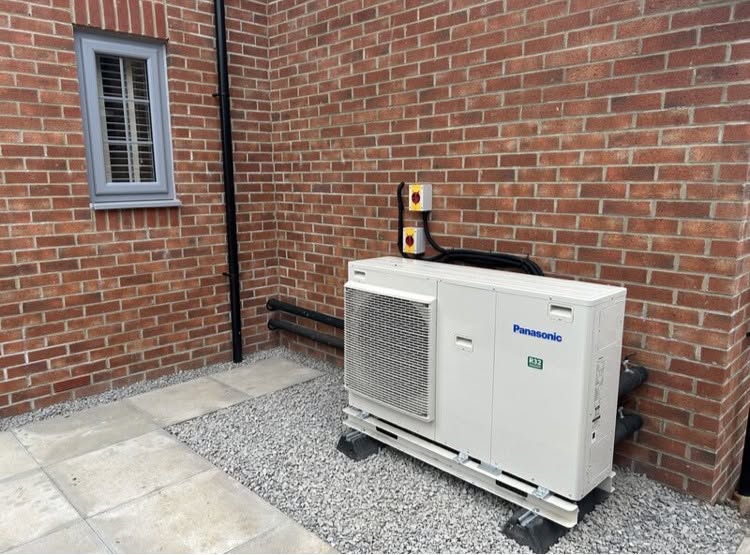
Designed for your property
What we’ll consider for your Glasgow property
A Glasgow enquiry may concern a top-floor tenement, a sandstone terrace, a 1930s semi, a post-war house or a heavily extended modern home. Those buildings lose heat in different ways and offer very different routes for a cylinder, upgraded emitters and an outdoor unit. A postcode and bedroom count are useful starting points, but they cannot replace a room-by-room assessment.
For heat pump radiators and hot-water cylinders, FLO starts with the building and the household rather than a packaged unit. The survey can account for room-by-room demand, existing radiators, available cylinder space, electrical supply, sound-sensitive boundaries and access for installation and future maintenance.
Glasgow radiators, cylinders and shared-building constraints
Make the heat-delivery system fit the Glasgow property, not a standard package
A Glasgow heat-pump design cannot stop at the outdoor unit. The rooms still need enough emitter output at the proposed water temperature, and the household needs a realistic way to store and recover hot water. Those questions look different in a top-floor tenement, a sandstone terrace, a post-war semi and a newer apartment. Glasgow City Council’s housing evidence says more than 70% of city homes are flats, so cupboard space, common routes, title responsibilities and access can be as influential as radiator dimensions. FLO can record the existing circuit room by room, distinguish retained emitters from justified changes, and plan the cylinder, valves, controls and pipework as one buildable system. The result should explain why each alteration is included rather than treating every radiator or cupboard as automatically unsuitable.
Tenement heat delivery begins with rooms and shared routes
A tenement may combine high ceilings, exposed gable rooms, newer glazing and internal rooms with markedly different demand. Radiator decisions therefore need the calculated requirement for each space and the output available at the intended heat-pump conditions; a visual judgement or boiler-era sizing rule is not enough. The route between radiators, risers and any internal plant also deserves attention. Pipework crossing a common close, shared wall or communal area may involve ownership or factor questions even when the equipment itself fits inside the flat. FLO can separate technical need from permission risk before quoting: identify which emitters appear reusable, which need a closer measurement, and which route assumptions need the owner or factor to confirm. That creates a useful feasibility record without claiming that all Glasgow flats need the same upgrades.
Hot-water storage must earn its space in a city home
Many Glasgow enquiries begin with a combi boiler and no existing cylinder, while other properties retain older storage in a cupboard or loft. Neither starting point determines the answer. During your survey, FLO will record household size, bathrooms, shower and bath patterns, simultaneous use, available water pressure, possible cupboard dimensions and a practical delivery route. A nominal volume chosen from bedroom count alone can miss the way the home is actually used. The proposed cylinder also needs service clearances, safe access to valves and a sensible connection to the heat source. In a compact flat, alternative positions may have different consequences for storage and pipe runs; in a house, a generous cupboard can still be unsuitable if access or distribution is poor. The written design will show the chosen position and the assumptions behind it so you can understand the trade-off.
Selective changes protect character and control disruption
Glasgow’s sandstone homes can contain cast-iron-style emitters, decorative covers, later panel radiators and extensions served by another generation of pipework. A whole-house replacement list is not automatically more rigorous. FLO can compare actual radiator sizes and types against room demand, note the effect of covers or restricted airflow, and test whether targeted larger emitters or other distribution work would let the system operate coherently. Where conservation or interior character matters, those findings give the design team a basis for discussing sympathetic options rather than promising that appearance has no performance consequence. Hydraulic balance, control strategy and usable flow through the existing circuit are considered alongside output. This turns the radiator schedule into an accountable part of the heat-pump specification rather than an allowance that only becomes clear after work has started.
Local planning information
Flats and shared responsibility are central to Glasgow planning
For radiators and hot water, local building types help identify likely construction, access and plant-space questions; final emitter output and cylinder duty still come from measurements and household demand.
Request a £0 whole-heating-system survey and written quote in Glasgow
Share the property and present-system details so FLO can review room output, selective upgrades, pipework and cylinder recovery as one heating system. FLO will confirm service availability for the Glasgow postcode.
What this Glasgow service includes
- Room-by-room radiator output checks
- Selective emitter resizing
- Pipework and flow-rate assessment
- Cylinder capacity and recovery review
- Plant-space and access planning
- Controls and balancing at handover
What the survey will check locally
For traditional masonry, the design needs realistic wall, window and ventilation assumptions rather than treating every older building as identical. For extended homes, FLO separates the original structure from later additions so one warm open-plan room does not hide colder bedrooms or undersized pipework elsewhere.
Dense streets and small rear gardens put extra weight on airflow, sound, boundary position and a maintainable route back to the indoor equipment. Flats can add title, communal-access and planning questions. These issues are checked before a final unit or installation route is promised.
What happens next
- 01
Measure room demand
Use the heat-loss calculation to establish the output required from each emitter.
- 02
Check existing equipment
Compare radiator, pipework and cylinder performance with the proposed heat-pump design.
- 03
Specify necessary changes
Retain suitable components and clearly identify only the upgrades the system requires.
- 04
Balance and explain
Commission the distribution system and show the homeowner how the controls should be used.
Related local services
Other heat pump help in Glasgow
Nearby areas
FLO welcomes enquiries from Bearsden, Bishopbriggs, Clydebank, Newton Mearns, Rutherglen, East Renfrewshire and surrounding communities. The property postcode is used to confirm availability.
Answers that may help you decide
Questions people ask
Does FLO provide heat pump radiators and hot-water cylinders in Glasgow?+
FLO accepts enquiries for heat pump radiators and hot-water cylinders in Glasgow. Availability is confirmed using the postcode, system details and project scope.
What should I include in a Glasgow enquiry?+
Provide the property type, current heating, postcode and contact details. Existing system owners should also include the make, model, age and any symptoms or fault codes.
Can a heat pump work in a Glasgow tenement?+
It can be possible, but ownership, shared fabric, outdoor-unit position, sound, access and hot-water space need specific checks. A tenement should not be treated like a detached house.
Are sandstone homes automatically unsuitable?+
No. Construction, exposure, air leakage, emitters and the upgrades already made all matter. A measured design is more useful than a rule based only on wall material.
Do heat pumps need oversized radiators?+
They often need more emitter output than a high-temperature boiler system, but the requirement is calculated room by room. Not every radiator automatically needs replacement.
Can I keep my existing hot-water cylinder?+
Some cylinders may not have a suitable heat-exchanger area or recovery performance. The design should check this along with available space and household demand.