
Service area
Renfrewshire
Renfrewshire and the lower Clyde · enter your postcode and we’ll confirm availability
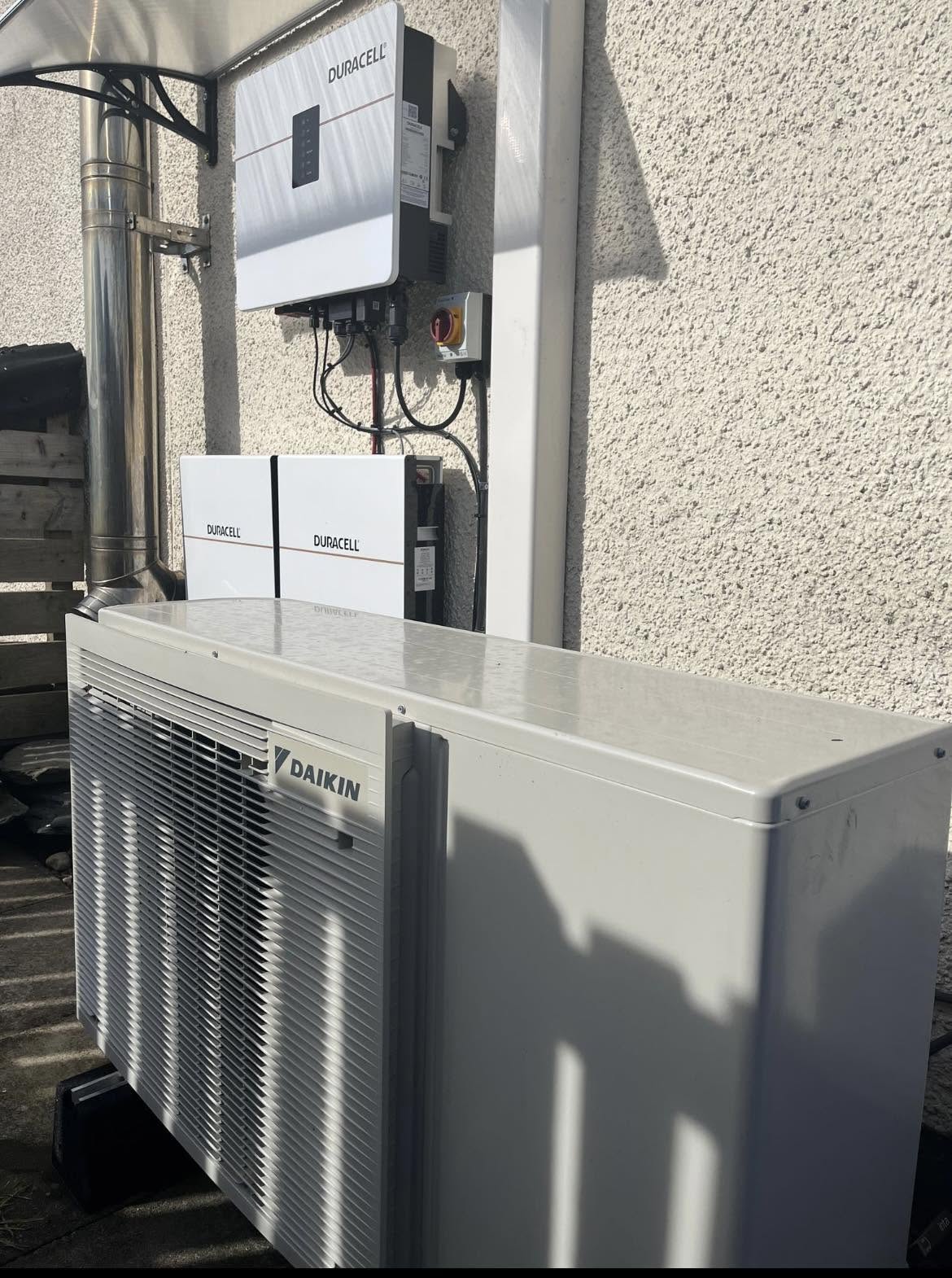
Designed for your property
What we’ll consider for your Renfrewshire property
Renfrewshire’s housing ranges from traditional terraces and sandstone properties to post-war neighbourhoods, modern estates and larger homes towards the rural edge. Boundary distances, prevailing weather and the route to internal equipment can vary even within the same street.
For heat pump home assessments, FLO uses a heat-loss-led approach to decide whether existing emitters can be retained, where equipment can sit and what changes would make the system comfortable and efficient. Funding guidance can remain part of the same enquiry if it is relevant.
Renfrewshire heat-loss and siting review
Compare compact and remote unit positions before either shapes the quote
Renfrewshire properties range from traditional stone and post-war housing to recent estates and larger rural-edge homes. The assessment should therefore begin with the building’s actual fabric and heating system, then test practical outdoor choices. A small garden may concentrate sound and boundary constraints; a generous plot may encourage a long, inefficient equipment route. FLO can measure both, alongside emitters, hot water, electricity and controls, before preparing the basis for a quote. Renfrewshire Council lists eight conservation areas and says additional restrictions apply in most, so address-level planning information belongs in the record where relevant. Funding can be discussed later against the resulting system rather than allowed to replace the technical assessment.
Compare positions with dimensions rather than preference
FLO can document a near and a discreet alternative, measuring airflow, boundary relationships, sound context, drainage and route length for each. Mature planting and proposed screening are noted because future growth can reduce clearance. This comparison makes the trade-off visible: the furthest corner is not automatically considerate, and the shortest route is not automatically acceptable. The selected position should remain accessible throughout the unit’s life. Ground condition and likely base construction are recorded too.
Set a room-by-room retention plan
Traditional masonry and post-war cavity construction need different heat-loss inputs, especially where windows, lofts or extensions have changed. Existing radiator output is tested at the intended design temperature. The survey can then categorise radiators as suitable, marginal or needing change, with pipework condition included. This gives the quote a clear basis and avoids using property age as a shortcut for wholesale replacement. Any unconfirmed construction details will be clearly marked in your report.
Flag designation without overstating its effect
Renfrewshire’s mapped conservation areas include Castlehead, Paisley Town Centre, Houston, Kilbarchan, Lochwinnoch and Ranfurly. If the address appears affected, the assessment should record the proposed elevation and identify the council check still required. It should not claim approval or assume refusal. Non-designated homes still need the applicable permitted-development and sound conditions considered, so planning status remains one element rather than the whole feasibility decision. Photographs anchor that check to a real proposal.
Local planning information
Heritage controls differ across Renfrewshire neighbourhoods
For a home assessment, this identifies which ownership, fabric or planning question should be answered before equipment is discussed.
Request a £0 home survey and written heat-pump quote in Renfrewshire
Share the property basics and the uncertainty you want resolved. FLO will use the first call and survey to assess heat loss, emitters, hot water, electrics and siting. FLO will confirm service availability for the Renfrewshire postcode.
What this Renfrewshire service includes
- Property and occupancy discussion
- Room-by-room heat-loss inputs
- Radiator and pipework review
- Hot-water cylinder and plant-space checks
- Electrical supply and outdoor-location review
- Clear recommended next step
What the survey will check locally
FLO uses calculated heat demand and emitter performance to decide what can stay and what should change. The design also covers hot-water recovery, electrical requirements and controls so the finished system is not reduced to an outdoor-unit specification.
Compact gardens require a disciplined siting discussion; larger plots can introduce unnecessarily long pipe runs if appearance is prioritised without considering efficiency and maintenance. The survey weighs those trade-offs openly.
What happens next
- 01
Initial details
Tell us about the building, present heating and what you would like to do.
- 02
Survey preparation
FLO identifies the areas that need measurement, inspection or evidence at the property.
- 03
Technical visit
The survey examines the heating system, fabric, rooms, plant space, access and potential outdoor position.
- 04
Clear recommendations
The findings inform the system design, any recommended improvements and what should be included in your quote.
Related local services
Other heat pump help in Renfrewshire
Nearby areas
FLO welcomes enquiries from Paisley, Renfrew, Johnstone, Bishopton, Bridge of Weir, Erskine and surrounding communities. The property postcode is used to confirm availability.
Answers that may help you decide
Questions people ask
Does FLO provide heat pump home assessments in Renfrewshire?+
FLO accepts enquiries for heat pump home assessments in Renfrewshire. Availability is confirmed using the postcode, system details and project scope.
What should I include in a Renfrewshire enquiry?+
Provide the property type, current heating, postcode and contact details. Existing system owners should also include the make, model, age and any symptoms or fault codes.
Can funding be considered with a Renfrewshire quote?+
Yes. Ask for funding guidance within the same FLO enquiry so it remains connected to the actual property and proposed system.
Will a small garden prevent installation?+
Not necessarily. The unit still needs compliant airflow, sound, drainage and service clearances, which a site assessment can test.
Why is a home assessment important?+
Heat demand, emitter output and installation constraints are specific to the property. A survey reduces the risk of sizing or pricing a system around generic assumptions.
Is an EPC enough to size a heat pump?+
An EPC can provide useful background, but final design should use a suitable heat-loss method and a direct assessment of the heating system and property.