
Heat-pump surveys in your area
Winchburgh, Bridgend and Philpstoun
West Lothian Council · surveys available across West Lothian
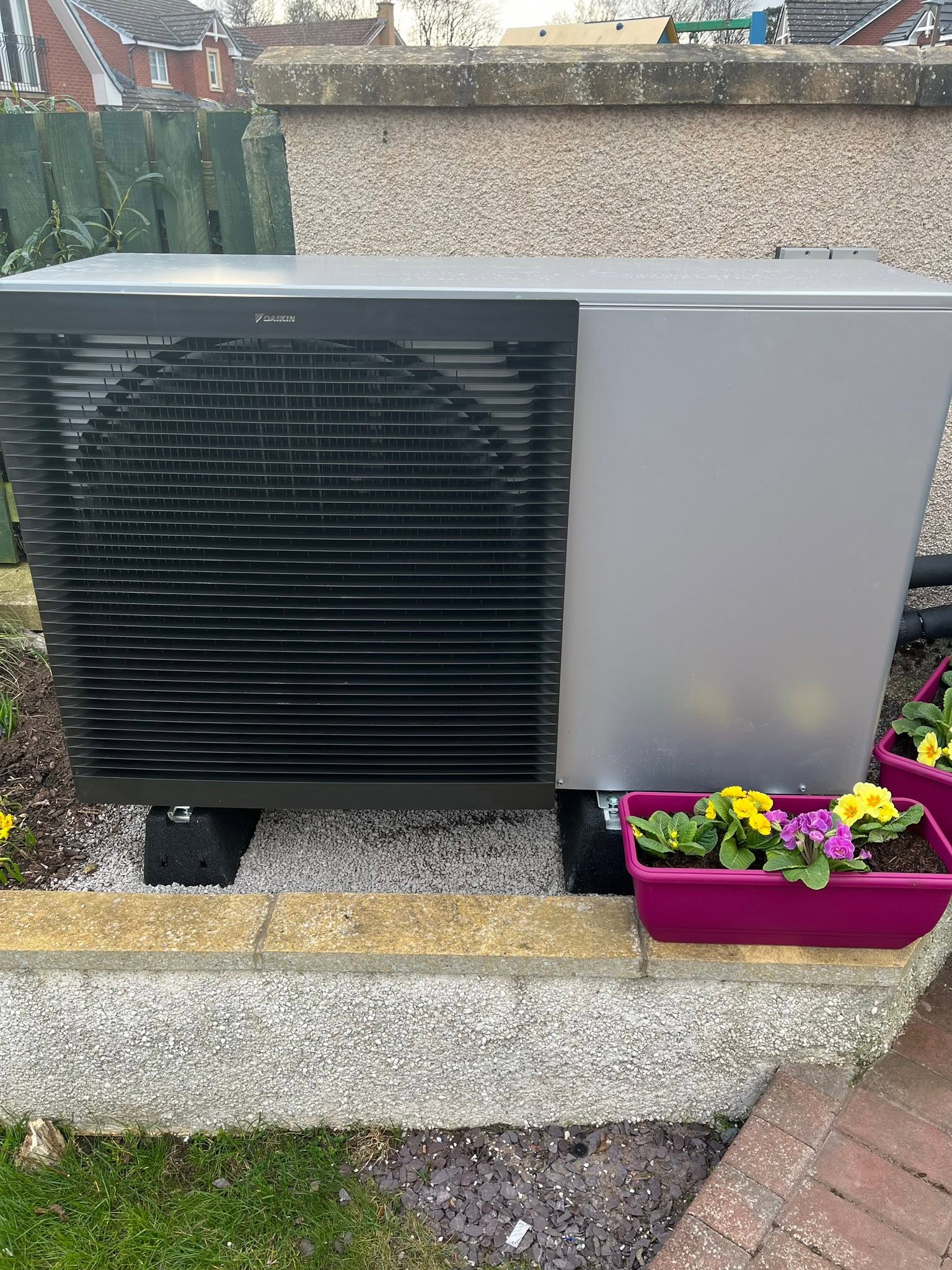
Designed around your home
What your heat-pump survey needs to consider in Winchburgh, Bridgend and Philpstoun
Housing snapshot
West Lothian Council’s LHEES Category 3 table records 155 properties across Winchburgh, Bridgend and Philpstoun, with significant fabric improvement followed by a heat pump suggested for 115. Your survey confirms whether that sequence is relevant to your home now.
Heating-system checks
Establish the construction period and extension history, then check peak demand, wet-distribution suitability, electrical capacity, cylinder space and an installation route that remains accessible for servicing.
Planning and siting
Planning requirements depend on the exact address. FLO checks the proposed unit against Scottish Class 6H limits, road-facing restrictions, boundaries, sound and any property-specific designation.
Request a £0 heat-pump survey and written quote in Winchburgh, Bridgend and Philpstoun
Tell us about your home and what you want to achieve so FLO can prepare the right survey.
What we’ll check at your home
A heat-pump plan designed for your Winchburgh, Bridgend and Philpstoun home
Separate Winchburgh growth from village inheritance
Winchburgh’s modern development context creates a different starting brief from an older home in Bridgend or Philpstoun. A newer property may have lower calculated demand and a more regular services layout, yet warranty documents, as-built specifications and developer-installed controls still need checking. An older village or rural-edge house may combine solid walls, previous insulation, outbuildings and a fuel store or tank. Those conditions cannot be inferred from the postcode cluster. We ask which settlement and construction period apply so the survey can use the right fabric assumptions instead of relying on area-wide figures.
Define what the existing fuel system leaves behind
A mains-gas conversion, an oil replacement and a direct-electric project each begin with different assets and removal work. Oil or LPG may involve tank location, residual fuel and reinstatement; direct electric may mean there is no wet radiator circuit to retain; a modern gas system may already provide usable pipework and emitters, although their low-temperature output still needs testing. The electrical supply, consumer unit and any planned vehicle charging or solar equipment also belong in the same brief. Recording these facts early produces a realistic scope for Winchburgh, Bridgend or Philpstoun rather than advertising a single price or installation pattern that only fits one starting system.
Map access before committing to an outdoor position
The equipment route should be walked from delivery point to final base, then onward to the indoor hydraulic and hot-water components. Modern plots can have narrow side paths, finished landscaping and developer service corridors; village homes can present stone boundaries, stepped gardens or detached outbuildings. Airflow, defrost drainage, neighbouring openings, safe clearances and future service access all need to survive that route check. The national Class 6H provisions are a planning starting point rather than a design certificate. A survey recommendation should state which facts are confirmed, which drawings or permissions remain outstanding, and whether enabling work is required before a written heat-pump quotation can be dependable. Winchburgh documentation and village alteration records can then be requested according to the selected profile, not as a generic paperwork list.
Before your survey
Three questions that help prepare your survey
- 1
Is the home currently heated by mains gas, oil, LPG, direct electric or another system?
- 2
When was the main house built, and has it been extended or converted?
- 3
Are there known insulation, radiator, pipework or electrical upgrades still to complete?
Not sure? Tell us what you know and we’ll confirm the rest during your survey.
Nearby areas we cover
Heat-pump enquiries around Winchburgh, Bridgend and Philpstoun
We also welcome enquiries from the nearby communities below. Enter your postcode and we’ll confirm coverage and any local planning checks.
Need help nearby?
Surveys, installation and support around Winchburgh, Bridgend and Philpstoun
Questions about heat pumps in Winchburgh, Bridgend and Philpstoun
Why are Winchburgh, Bridgend and Philpstoun assessed differently?+
Construction age and alteration history change heat loss, emitter needs and equipment routes. A locality label alone cannot define the design.
Are the 115 modelled properties confirmed heat-pump candidates?+
No. The 115 are the Category 3 subset assigned a modelled heat-pump route after significant improvement; the table does not establish whether any individual home is ready.
Should an off-gas home automatically replace its fuel with a heat pump?+
No automatic choice is appropriate. Heat demand, distribution system, electrical supply, tariff, existing equipment and complete project scope all need comparison.
Independent sources
Scheme rules and guidance can change. Check these sources before making a financial or planning decision.