
Service area
Paisley
Renfrewshire · enter your postcode and we’ll confirm availability
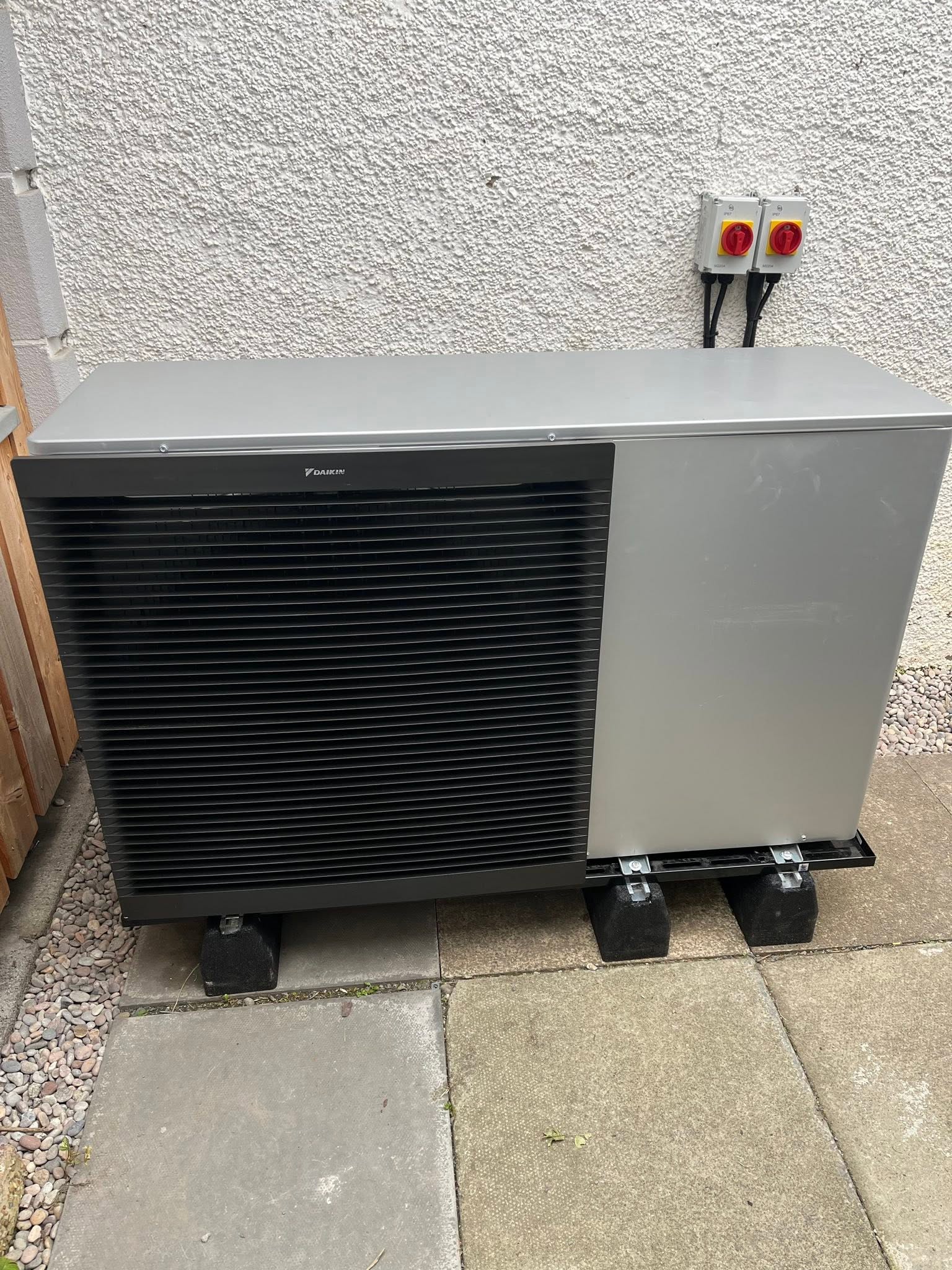
Designed for your property
What we’ll consider for your Paisley property
Paisley includes tenements, traditional terraces, sandstone buildings, post-war estates and suburban detached homes. Shared fabric and compact external space can matter as much as heat demand, particularly for flats or converted buildings.
For heat pump radiators and hot-water cylinders, FLO begins with the property type and heating arrangement, then checks fabric, emitters, hot water, electrical supply and the route between outdoor and indoor equipment. Flats and shared buildings need ownership and planning questions resolved early.
Paisley radiator and hot-water planning for flats, stone homes and suburbs
Solve Paisley’s ownership, space and mixed-fabric questions before fixing the scope
Paisley ranges from tenements and converted stone buildings to terraces, post-war houses and suburban detached homes. Renfrewshire Council separately identifies Paisley Town Centre, Castlehead, Greenlaw and Thornly Park as conservation areas, with additional restrictions in most of its designated areas. That local context matters to a full heat-pump route, especially where common or external fabric is involved, but radiator and cylinder choices must still come from the property. FLO can calculate each room, measure emitters, trace accessible distribution, record ownership or factor dependencies and assess realistic plant positions. Hot-water storage then reflects occupancy and use rather than a generic flat or house allowance. The finished scope can distinguish confirmed indoor work from permissions or access matters that need resolution.
A flat needs a buildable plant route as well as enough emitter output
A Paisley tenement or converted flat may have radiators that appear suitable after room calculation but no straightforward cylinder cupboard or connection route. FLO can measure possible locations, doors and service clearances while checking whether pipework would cross shared fabric or depend on a communal area. Title, factor and co-owner questions should be identified as dependencies rather than silently assumed away. Within the rooms, stone walls, top-floor exposure, glazing and internal position are recorded separately; being a tenement does not give every room one heat-loss value. Existing radiator types and covers are measured at the intended conditions. Bringing these strands together allows a feasibility-led quote that does not promise a complete system based on emitter surface while leaving ownership and hot-water storage unresolved.
Traditional stone and later suburban rooms need different decisions
A traditional Paisley terrace can have high ceilings, masonry and a later rear kitchen, while a suburban house may contain cavity construction, converted space and several generations of panel radiator. FLO can treat each construction zone accurately and preserve existing emitters where the numbers support it. Where output is short, the schedule can explain whether the change responds to room load, restricted airflow, position or the proposed system temperature. Accessible pipework and valves also need inspection because a large enough radiator cannot correct a branch that receives inadequate flow. This avoids postcode-driven assumptions and gives customers a room-by-room account of why the proposed work differs between the original property and its alterations.
Cylinder design begins with how the Paisley household lives
A two-bedroom flat can have intense morning shower demand, while a larger house may have modest overlapping use. FLO can record regular occupants, fixtures, baths, showers, peak timing and desired recovery before recommending stored volume. Incoming water conditions, the location of outlets and the available equipment route are checked alongside capacity. If your existing heating uses a combi, the proposal will show where new storage would go and what space or joinery changes are included. If a cylinder already exists, age and presence alone do not establish compatibility. Your proposal can state the demand assumptions and chosen position, making it easier to compare with another quote. Conservation-area or shared-title checks are based on the exact address rather than treated as a rule for every Paisley property.
Local planning information
Paisley contains several separate conservation areas
For radiators and hot water, local building types help identify likely construction, access and plant-space questions; final emitter output and cylinder duty still come from measurements and household demand.
Request a £0 whole-heating-system survey and written quote in Paisley
Share the property and present-system details so FLO can review room output, selective upgrades, pipework and cylinder recovery as one heating system. FLO will confirm service availability for the Paisley postcode.
What this Paisley service includes
- Room-by-room radiator output checks
- Selective emitter resizing
- Pipework and flow-rate assessment
- Cylinder capacity and recovery review
- Plant-space and access planning
- Controls and balancing at handover
What the survey will check locally
FLO checks heat loss, emitters and hot-water arrangements alongside ownership and access constraints. For traditional properties the aim is not to force one standard upgrade list, but to identify the flow temperature and changes that can deliver comfort sensibly.
A proposed unit needs a compliant relationship to neighbours, boundaries, windows and the route indoors. Flats may require title or communal agreement before a technically possible design becomes an installable project.
What happens next
- 01
Measure room demand
Use the heat-loss calculation to establish the output required from each emitter.
- 02
Check existing equipment
Compare radiator, pipework and cylinder performance with the proposed heat-pump design.
- 03
Specify necessary changes
Retain suitable components and clearly identify only the upgrades the system requires.
- 04
Balance and explain
Commission the distribution system and show the homeowner how the controls should be used.
Related local services
Other heat pump help in Paisley
Nearby areas
FLO welcomes enquiries from Paisley, Ralston, Dykebar, Glenburn, Linwood, Johnstone and surrounding communities. The property postcode is used to confirm availability.
Answers that may help you decide
Questions people ask
Does FLO provide heat pump radiators and hot-water cylinders in Paisley?+
FLO accepts enquiries for heat pump radiators and hot-water cylinders in Paisley. Availability is confirmed using the postcode, system details and project scope.
What should I include in a Paisley enquiry?+
Provide the property type, current heating, postcode and contact details. Existing system owners should also include the make, model, age and any symptoms or fault codes.
Can a Paisley tenement have an individual heat pump?+
It can be technically possible, but ownership, permission, outdoor position, sound, access and hot-water space need case-specific review.
Does FLO provide repair help in Paisley?+
Yes, subject to system details and availability. Send the brand, fault code and whether heating or hot water has stopped so FLO can confirm how best to help.
Do heat pumps need oversized radiators?+
They often need more emitter output than a high-temperature boiler system, but the requirement is calculated room by room. Not every radiator automatically needs replacement.
Can I keep my existing hot-water cylinder?+
Some cylinders may not have a suitable heat-exchanger area or recovery performance. The design should check this along with available space and household demand.