
Service area
Newton Mearns and Giffnock
East Renfrewshire · enter your postcode and we’ll confirm availability
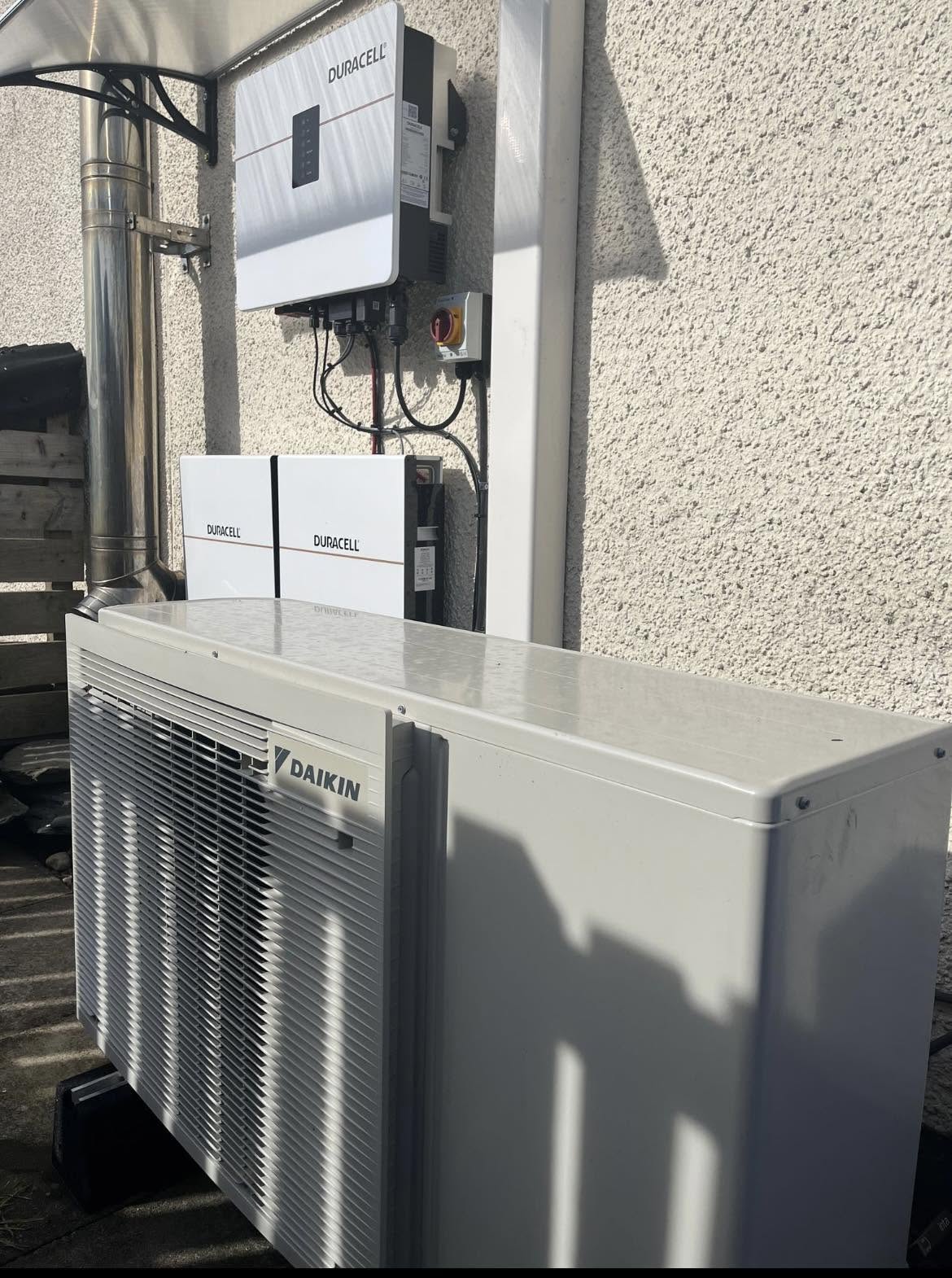
Designed for your property
What we’ll consider for your Newton Mearns and Giffnock property
Newton Mearns and Giffnock include bungalows, villas, large detached houses, modern estates and extensively remodelled properties. Open-plan additions and multiple bathrooms can change both space-heating demand and hot-water recovery requirements.
For heat pump system design, The useful starting point is a room-by-room design rather than a headline kilowatt figure. FLO reviews present heating, extension history, radiator sizes, cylinder space, electrical capacity and a position that balances airflow, access, sound and appearance.
Newton Mearns and Giffnock multi-zone design
Create one coherent heating plan for extensions, bathrooms and mixed emitters
Newton Mearns and Giffnock contain bungalows, villas, large detached houses, modern developments and extensively remodelled homes. Open-plan rear additions, several bathrooms and mixed heating zones can make simple capacity rules especially misleading. FLO calculates original and later construction separately, then tests how their radiators or underfloor circuits can share an efficient operating strategy. Hot-water recovery, electricity, controls and the external equipment route are set alongside the room schedule. East Renfrewshire’s development context includes established and newer neighbourhoods, but the design follows the actual building and its alterations rather than assigning performance from a broad age or postcode category.
Prevent one extension from dictating the entire flow temperature
A glazed kitchen-family space may have modern insulation and underfloor heating while the original bungalow or villa retains radiators and smaller branches. Those zones can have different output characteristics even when their peak loads are similar. FLO calculates them independently, checks the emitters at candidate temperatures and reviews how pumps, mixing arrangements and controls would operate together. If one old radiator creates the highest temperature requirement, the design identifies whether a targeted change is more sensible than raising the whole circuit. This protects efficiency without assuming every existing emitter must go. The written schedule also records the basis for each construction assumption so later survey evidence can refine the design without rebuilding it from a generic floor-area estimate.
Keep space heating and peak hot-water demand distinct
Larger East Renfrewshire homes can have several showers, baths or periods of simultaneous use. A heat pump selected only around the building load still needs a cylinder and control strategy able to meet the household’s agreed hot-water pattern. FLO records occupancy, outlets and recovery expectations, then checks storage volume, coil performance, plant dimensions and service access. The proposal explains how hot-water priority interacts with heating rather than adding an unspecified margin to nominal unit size. Electrical provision is documented with the cylinder arrangement. This produces a more useful conversation about comfort and recovery and avoids promising unlimited boiler-style hot water from a system whose storage and reheating duties have never been defined.
Fit the outdoor unit into a finished plot without constraining it
Side passages, landscaped gardens and boundaries can offer several apparent positions around Newton Mearns and Giffnock. The design compares them for airflow, sound, drainage, pipe length, neighbour context and future servicing. A tightly fenced enclosure is not accepted simply because it hides the equipment, and a distant rear location is not preferred if it creates excessive connections or access difficulty. Controls and indoor plant are then placed around the most credible route. Listing, conservation status or other planning conditions are checked from the property where relevant; no general permission claim is made for the area. This ensures the final equipment schedule belongs to a buildable layout rather than an abstract calculation.
Local planning information
New and established neighbourhoods need different assumptions
For system design, this local evidence identifies the fabric, ownership, exposure or planning assumption that must be resolved alongside room heat loss, flow temperature and equipment selection.
Request a £0 survey and written heating-system design quote in Newton Mearns and Giffnock
Tell FLO about the building, heating demand and existing system so the review can begin with room heat loss, flow temperature, emitters, hot water and controls. FLO will confirm service availability for the Newton Mearns and Giffnock postcode.
What this Newton Mearns and Giffnock service includes
- Room-by-room heat-loss calculation
- Design flow-temperature strategy
- Heat pump output and performance selection
- Emitter and pipework checks
- Hot-water storage and recovery planning
- Controls and commissioning approach
What the survey will check locally
The FLO assessment treats each construction zone separately before designing the system as a whole. Existing zoning, radiator sizes, underfloor areas and pipework are checked at the intended temperatures, helping avoid a solution that works well in the extension but poorly elsewhere.
Outdoor appearance matters, but hiding a unit behind tight fencing or planting can damage airflow and servicing. The survey seeks a position that fits the property while keeping clearances, drainage, sound and the route indoors credible.
What happens next
- 01
Establish demand
Calculate the building and room-level heat requirements using property-specific information.
- 02
Match distribution
Check radiator, underfloor and pipework performance at the intended temperatures and flow rates.
- 03
Select equipment
Choose the heat pump, cylinder, controls and supporting components around the design conditions.
- 04
Document the system
Set out the specification, assumptions, scope and commissioning requirements before installation.
Related local services
Other heat pump help in Newton Mearns and Giffnock
Nearby areas
FLO welcomes enquiries from Newton Mearns, Giffnock, Clarkston, Busby, Thornliebank, Eaglesham and surrounding communities. The property postcode is used to confirm availability.
Answers that may help you decide
Questions people ask
Does FLO provide heat pump system design in Newton Mearns and Giffnock?+
FLO accepts enquiries for heat pump system design in Newton Mearns and Giffnock. Availability is confirmed using the postcode, system details and project scope.
What should I include in a Newton Mearns and Giffnock enquiry?+
Provide the property type, current heating, postcode and contact details. Existing system owners should also include the make, model, age and any symptoms or fault codes.
Do large extensions make a property unsuitable?+
No. They make accurate zoning, heat-loss and emitter information more important, particularly where old and new construction meet.
Can FLO include funding in an East Renfrewshire quote?+
Yes. Select funding guidance during the same quote enquiry; Home Energy Scotland remains responsible for eligibility and the written offer.
Why does flow temperature matter?+
Lower flow temperatures can improve heat-pump efficiency, but the emitters must still deliver the required room heat. The design balances both.
Can existing pipework be reused?+
Sometimes. Pipe sizes, layout, condition and required flow rates must be checked rather than assumed.