
Service area
Newton Mearns and Giffnock
East Renfrewshire · enter your postcode and we’ll confirm availability
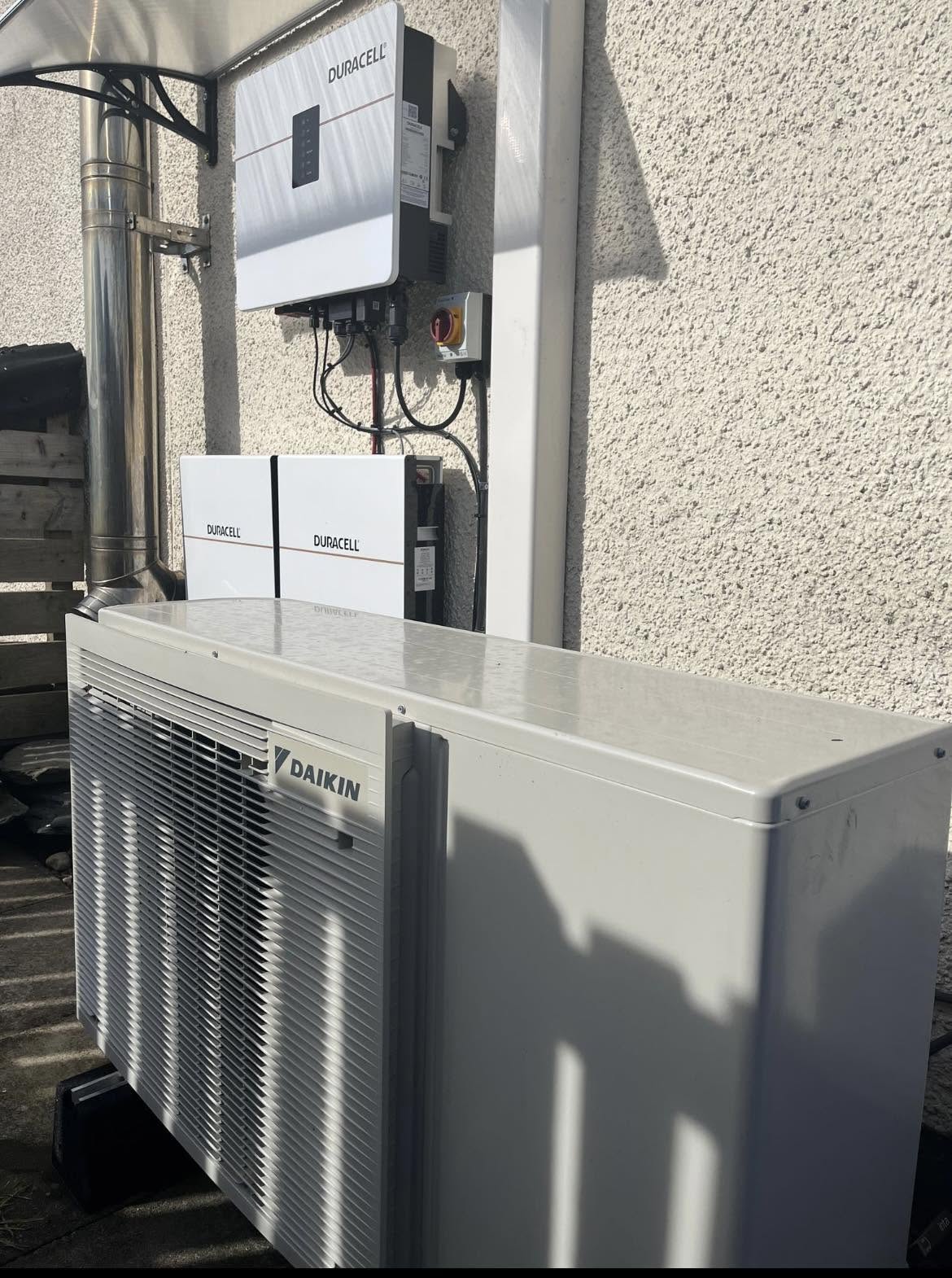
Designed for your property
What we’ll consider for your Newton Mearns and Giffnock property
Newton Mearns and Giffnock include bungalows, villas, large detached houses, modern estates and extensively remodelled properties. Open-plan additions and multiple bathrooms can change both space-heating demand and hot-water recovery requirements.
For heat pump controls and aftercare, FLO relates the customer's temperatures, schedules and comfort issue to the installed system and the type of building. That helps separate a settings question from a hydraulic, emitter or wider performance problem.
Newton Mearns and Giffnock controls for remodelled family homes
Unify underfloor zones, radiators and busy routines without making them fight
Newton Mearns and Giffnock contain bungalows, villas, modern estates and large homes reshaped by open-plan extensions. Several bathrooms, mixed underfloor and radiator circuits, and third-party automation can turn everyday settings into a systems question. FLO reviews the original and altered zones, identifies each control’s function and records when comfort or hot-water performance differs from expectation. East Renfrewshire’s mix of established and growth areas helps frame property history, but the actual equipment and building response lead the advice. Controls aftercare clarifies what the homeowner can adjust and when the issue needs hydraulic, electrical or design investigation.
Prevent a glazed family room from controlling the wrong spaces
A rear kitchen-family extension may gain solar heat, cool rapidly after sunset or use an underfloor circuit with a slower response than the radiators in the original house. Its thermostat should not be assumed to represent bedrooms or front rooms. FLO can compare zone schedules, sensor positions and room temperatures across a complete day, then explain how the heat pump sees each demand. A higher global target can be counterproductive if the real issue is timing, a mixing arrangement or local emitter capacity. The household can test one planned change while retaining a baseline. Where the zones require different water temperatures or have unclear pumps and actuators, settings advice reaches its limit and an on-site review is recommended. This preserves comfort without presenting the extension as proof that the entire system needs hotter operation.
Make occupancy automation gradual and transparent
Presence controls and phone apps can be attractive in busy households, but an aggressive away mode may let a larger building cool further than expected before the evening return. FLO can review how location-based automation, manual overrides and the heat-pump’s own schedule interact. A modest setback or longer lead time may suit the observed response better than repeated off-and-boost cycles, yet the answer depends on fabric, emitters and household priorities. The review documents who uses which interface so two occupants are not unknowingly changing competing settings. Installer-level values, safety functions and firmware options are excluded from casual experimentation. If automation hardware interrupts demand or closes too much of the system, a competent technical assessment is the next step rather than another rule added in software.
Separate hot-water peaks from space-heating comfort
Morning showers, evening baths and occasional guests can create brief high hot-water demand in an East Renfrewshire family home even when room heating is satisfactory. FLO records cylinder timings, recovery, boost use and the sequence of events instead of treating a single complaint as evidence that the heat pump is undersized. The review considers whether programmed hot-water priority temporarily changes space-heating behaviour and whether the customer’s expectation matches the documented system. It does not alter hygiene functions or protected targets through remote guesswork. Persistent shortfall can indicate capacity, sensor, component or design questions that require further assessment. Keeping the two duties distinct means a room-temperature curve is not raised to solve a cylinder issue, and a larger-store assumption is not made without understanding the actual peak-use pattern.
Local planning information
New and established neighbourhoods need different assumptions
For controls and aftercare, the evidence helps distinguish building response, access and local installation constraints from controller settings or a technical fault in the system itself.
Request a controls and comfort review in Newton Mearns and Giffnock
Describe the controls, temperatures, schedules and comfort issue so FLO can distinguish settings support from a wider system diagnosis. FLO will confirm service availability for the Newton Mearns and Giffnock postcode.
What this Newton Mearns and Giffnock service includes
- Controls and schedule walkthrough
- Weather-compensation explanation
- Comfort and temperature review
- Operating-pattern discussion
- Handover and documentation support
- Servicing or fault diagnosis when needed
What the survey will check locally
The FLO assessment treats each construction zone separately before designing the system as a whole. Existing zoning, radiator sizes, underfloor areas and pipework are checked at the intended temperatures, helping avoid a solution that works well in the extension but poorly elsewhere.
Outdoor appearance matters, but hiding a unit behind tight fencing or planting can damage airflow and servicing. The survey seeks a position that fits the property while keeping clearances, drainage, sound and the route indoors credible.
What happens next
- 01
Describe the concern
Explain what feels wrong: comfort, schedules, hot water, noise, bills or an unfamiliar control message.
- 02
Review the operation
The team considers the system type, settings and behaviour alongside the household’s expectations.
- 03
Make deliberate changes
Any adjustment should have a clear purpose and enough time to assess its effect.
- 04
Escalate when required
Physical faults or performance concerns can move into servicing or technical diagnosis.
Related local services
Other heat pump help in Newton Mearns and Giffnock
Nearby areas
FLO welcomes enquiries from Newton Mearns, Giffnock, Clarkston, Busby, Thornliebank, Eaglesham and surrounding communities. The property postcode is used to confirm availability.
Answers that may help you decide
Questions people ask
Does FLO provide heat pump controls and aftercare in Newton Mearns and Giffnock?+
FLO accepts enquiries for heat pump controls and aftercare in Newton Mearns and Giffnock. Availability is confirmed using the postcode, system details and project scope.
What should I include in a Newton Mearns and Giffnock enquiry?+
Provide the property type, current heating, postcode and contact details. Existing system owners should also include the make, model, age and any symptoms or fault codes.
Do large extensions make a property unsuitable?+
No. They make accurate zoning, heat-loss and emitter information more important, particularly where old and new construction meet.
Can FLO include funding in an East Renfrewshire quote?+
Yes. Select funding guidance during the same quote enquiry; Home Energy Scotland remains responsible for eligibility and the written offer.
Should I switch my heat pump off overnight?+
Many systems are designed to maintain comfort steadily rather than recover from large temperature drops. The right schedule depends on the property and system design.
What is weather compensation?+
It adjusts heating-water temperature in response to outdoor conditions so the system can provide enough heat without running hotter than necessary.