
Service area
Paisley
Renfrewshire · enter your postcode and we’ll confirm availability
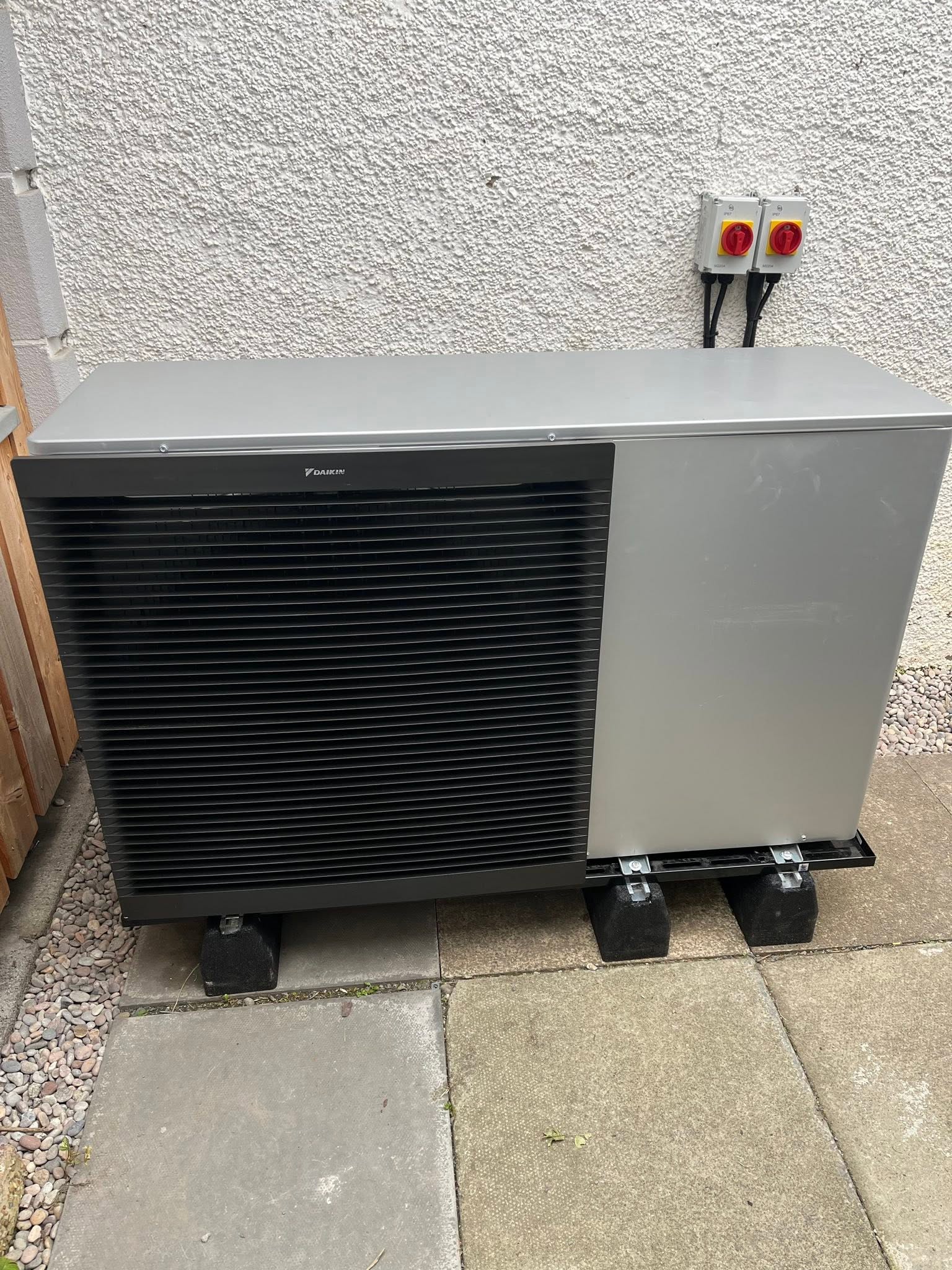
Designed for your property
What we’ll consider for your Paisley property
Paisley includes tenements, traditional terraces, sandstone buildings, post-war estates and suburban detached homes. Shared fabric and compact external space can matter as much as heat demand, particularly for flats or converted buildings.
For air-to-air heat pumps, FLO considers the building, available outdoor positions and rooms that need heating or cooling. The assessment covers likely indoor units, airflow, condensate and the route to the outdoor unit. Domestic hot water remains a separate system decision.
Paisley heating and cooling with shared-space questions resolved
Plan air-to-air differently for a tenement, terrace or suburban house
Paisley brings together tenements, sandstone buildings, traditional terraces, post-war estates and suburban detached homes, so the useful air-to-air questions change quickly between streets. A flat may have no privately controlled external position, while a whole house may offer several routes but place neighbours close to the quietest-looking corner. Indoor layouts also range from deep traditional rooms to later open-plan additions. The design needs to name the rooms receiving direct heating or cooling, the expected door positions and any existing heat retained elsewhere. Standard air-to-air systems do not normally supply domestic hot water, so cylinder, combi or direct-electric provision must be considered separately rather than disappearing from a fuel-switch conversation.
Establish who controls the outside wall
For a Paisley tenement or converted building, technical suitability is only one part of the decision. You may need to confirm title, factor arrangements, co-owner consent and access through common space before a rear-court or wall position is dependable. Pipework must also reach the flat without assuming rights over another property. Checking those facts early avoids designing around an external route that you are not permitted or practically able to use.
Direct air into the rooms that matter
A high-ceilinged front room, internal kitchen and bedrooms off a long hall will not share conditioned air equally. The assessment records where people spend time, which doors stay closed and whether cooling, winter heat or both drive each zone. A suburban open-plan space may need a different head position from a subdivided sandstone flat. The resulting schedule should state direct coverage and any rooms that retain another heater, making the comfort promise specific rather than whole-home by implication.
Navigate Paisley’s separate heritage areas
Paisley Town Centre, Castlehead, Greenlaw and Thornly Park are distinct conservation areas rather than one continuous designation. Renfrewshire Council also notes different additional restrictions for Greenlaw compared with its other conservation areas. The property address and proposed elevation therefore need checking before external plant, covers or penetrations are assumed acceptable. Planning review should sit alongside sound and maintenance access, because permission alone does not make a cramped or neighbour-facing position technically sound.
Local planning information
Paisley contains several separate conservation areas
For air-to-air work, the local surroundings influence visible outdoor siting, condensate routing and the relationship between indoor rooms and the external unit.
Request a room-by-room heating & cooling assessment and quote in Paisley
Explain the rooms, zones and outcome you want. FLO will review indoor positions, airflow, condensate and the outdoor route; domestic hot water remains separate. FLO will confirm service availability for the Paisley postcode.
What this Paisley service includes
- Room and usage assessment
- Indoor-unit layout planning
- Outdoor-unit and route selection
- Heating and cooling load consideration
- Controls and zoning setup
- Installation, commissioning and handover
What the survey will check locally
FLO checks heat loss, emitters and hot-water arrangements alongside ownership and access constraints. For traditional properties the aim is not to force one standard upgrade list, but to identify the flow temperature and changes that can deliver comfort sensibly.
A proposed unit needs a compliant relationship to neighbours, boundaries, windows and the route indoors. Flats may require title or communal agreement before a technically possible design becomes an installable project.
What happens next
- 01
Define the rooms
Identify which spaces need heating, cooling or both and how they are normally occupied.
- 02
Plan the layout
Consider indoor-unit positions, air movement, condensate, pipe routes and the outdoor location.
- 03
Specify the system
Match equipment and zones to the intended use, fabric and practical constraints.
- 04
Install and explain
Commission the system and show the household how to use modes, schedules and filters.
Related local services
Other heat pump help in Paisley
Nearby areas
FLO welcomes enquiries from Paisley, Ralston, Dykebar, Glenburn, Linwood, Johnstone and surrounding communities. The property postcode is used to confirm availability.
Answers that may help you decide
Questions people ask
Does FLO provide air-to-air heat pumps in Paisley?+
FLO accepts enquiries for air-to-air heat pumps in Paisley. Availability is confirmed using the postcode, system details and project scope.
What should I include in a Paisley enquiry?+
Provide the property type, current heating, postcode and contact details. Existing system owners should also include the make, model, age and any symptoms or fault codes.
Can a Paisley tenement have an individual heat pump?+
It can be technically possible, but ownership, permission, outdoor position, sound, access and hot-water space need case-specific review.
Does FLO provide repair help in Paisley?+
Yes, subject to system details and availability. Send the brand, fault code and whether heating or hot water has stopped so FLO can confirm how best to help.
Does an air-to-air heat pump provide hot water?+
Most standard air-to-air systems provide space heating and cooling rather than domestic hot water, so that requirement needs a separate solution.
Can one indoor unit heat the whole house?+
It depends on the layout, heat demand and air movement. Multi-room homes may need more than one indoor unit or a different system approach.