
Service area
Livingston
West Lothian · enter your postcode and we’ll confirm availability
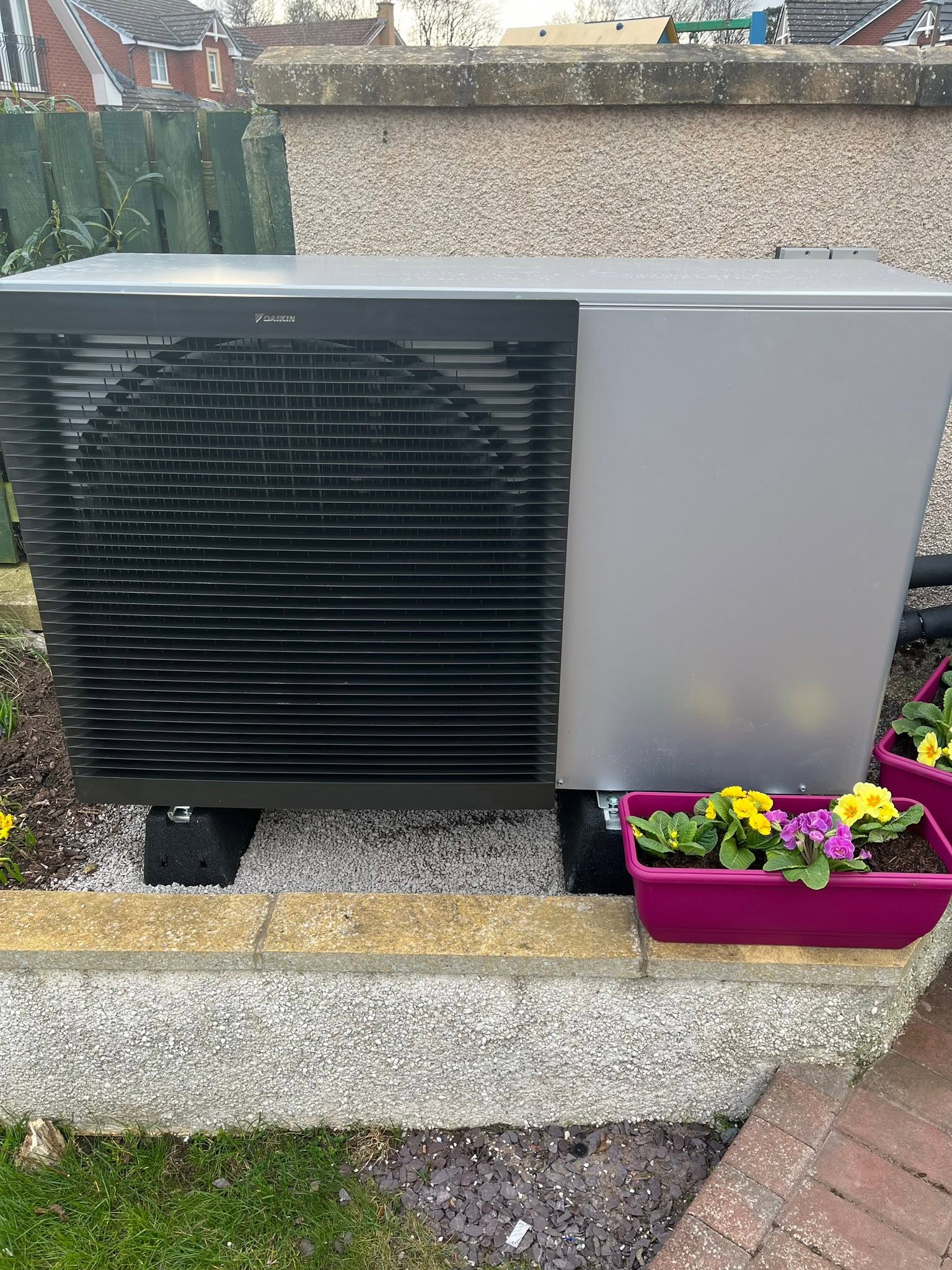
Designed for your property
What we’ll consider for your Livingston property
Livingston’s new-town neighbourhoods, later private estates and extended family homes create a wide range of fabric standards behind superficially similar elevations. Heating systems may also contain several generations of radiator and control upgrades.
For heat pump radiators and hot-water cylinders, A FLO survey checks the whole house rather than assuming one construction standard. It establishes room demand, flow-temperature targets, cylinder requirements, electrical capacity and a serviceable outdoor position before the final system is proposed.
Livingston radiators and cylinders for homes changed since new-town construction
Design around the Livingston home that exists now, not its original plan
Livingston’s new-town identity can conceal substantial variation. Original houses have gained replacement windows, insulation, open-plan layouts, garage conversions and rear extensions; later estates and recent homes started from different standards. West Lothian Council also identifies Livingston Village as a conservation area, showing why the exact address matters within the wider town. FLO can separate original construction from later zones, calculate room demand and test existing emitters and pipework at the proposed operating conditions. The survey also records controls and how each branch was added. A cylinder is then sized for real occupancy and fitted into a measured, serviceable location. This converts a broad development era into an accountable whole-system schedule and avoids presenting every Livingston house as equally “heat-pump ready.”
New-town archetype is only the beginning of the survey
Two original Livingston houses can now have different fabric and heating even where their elevations still match. FLO can verify loft, wall, window and extension information at the property rather than import it from a neighbouring EPC or development assumption. Each room’s result is paired with its existing radiator dimensions and type. This shows whether a bedroom emitter remains adequate, an open-plan area requires more surface, or the preferred system conditions should be revisited. A readiness label becomes useful only when it translates into these specific actions. The schedule should also state where information remains uncertain behind finishes, protecting the customer from a confident but unsupported promise that every original circuit can be retained or must be replaced.
Several renovation eras can create competing zones
A rear extension may use underfloor heating, a garage conversion may sit on its own radiator branch, and original rooms may retain older controls. FLO can map the temperatures, flow requirements and calling behaviour of each zone before defining how the heat pump should operate. Weather compensation and steadier heating should be planned across the entire house rather than layered beneath boiler-style timers and isolated thermostats. Where pipework or controls need rationalisation, the proposal can identify the exact purpose. This distinction matters: adding radiator output is not a substitute for coordinating mixed zones, and a sophisticated controller cannot overcome inadequate flow. A Livingston project can therefore focus spending on the parts that make the distribution coherent rather than mechanically upgrading every visible component.
Cylinder location is part of the remodelling history
The original airing cupboard may have been removed, a garage may now be a living space, or a utility extension may create a new plant option. FLO can inspect the house as it stands, measure access and clearance, and compare routes to the heat source and hot-water outlets. Capacity comes from occupants, bathrooms, peak use and recovery expectations. A newer house with efficient fixtures may have a different profile from a similarly sized home with frequent baths or overlapping showers. The written quote can show the selected location, pipework consequences and any storage sacrificed. If the property is within Livingston Village or another designated setting, the relevant external check is flagged separately, so local heritage context does not become a substitute for practical indoor design.
Local planning information
Livingston includes both planned new-town housing and historic pockets
For radiators and hot water, local building types help identify likely construction, access and plant-space questions; final emitter output and cylinder duty still come from measurements and household demand.
Request a £0 whole-heating-system survey and written quote in Livingston
Share the property and present-system details so FLO can review room output, selective upgrades, pipework and cylinder recovery as one heating system. FLO will confirm service availability for the Livingston postcode.
What this Livingston service includes
- Room-by-room radiator output checks
- Selective emitter resizing
- Pipework and flow-rate assessment
- Cylinder capacity and recovery review
- Plant-space and access planning
- Controls and balancing at handover
What the survey will check locally
FLO checks the building zone by zone, then designs one coherent operating strategy. Correct sizing, suitable emitters and weather-compensated controls matter more than simply choosing a familiar brand or matching the previous boiler output.
Outdoor siting is often achievable in a side or rear area, but access, drainage, boundaries and the indoor equipment route need measuring. The assessment also checks electrical capacity and the space needed for hot-water storage.
What happens next
- 01
Measure room demand
Use the heat-loss calculation to establish the output required from each emitter.
- 02
Check existing equipment
Compare radiator, pipework and cylinder performance with the proposed heat-pump design.
- 03
Specify necessary changes
Retain suitable components and clearly identify only the upgrades the system requires.
- 04
Balance and explain
Commission the distribution system and show the homeowner how the controls should be used.
Related local services
Other heat pump help in Livingston
Nearby areas
FLO welcomes enquiries from Livingston, East Calder, Mid Calder, Uphall, Broxburn, West Calder and surrounding communities. The property postcode is used to confirm availability.
Answers that may help you decide
Questions people ask
Does FLO provide heat pump radiators and hot-water cylinders in Livingston?+
FLO accepts enquiries for heat pump radiators and hot-water cylinders in Livingston. Availability is confirmed using the postcode, system details and project scope.
What should I include in a Livingston enquiry?+
Provide the property type, current heating, postcode and contact details. Existing system owners should also include the make, model, age and any symptoms or fault codes.
Can an extended Livingston house keep its existing radiators?+
Some may be retained. The output of each emitter needs checking against room heat loss and the selected flow temperature.
How quickly can FLO confirm coverage?+
Send your postcode and project details with your quote request. FLO can then confirm the most useful next step and current survey availability.
Do heat pumps need oversized radiators?+
They often need more emitter output than a high-temperature boiler system, but the requirement is calculated room by room. Not every radiator automatically needs replacement.
Can I keep my existing hot-water cylinder?+
Some cylinders may not have a suitable heat-exchanger area or recovery performance. The design should check this along with available space and household demand.