
Service area
Livingston
West Lothian · enter your postcode and we’ll confirm availability
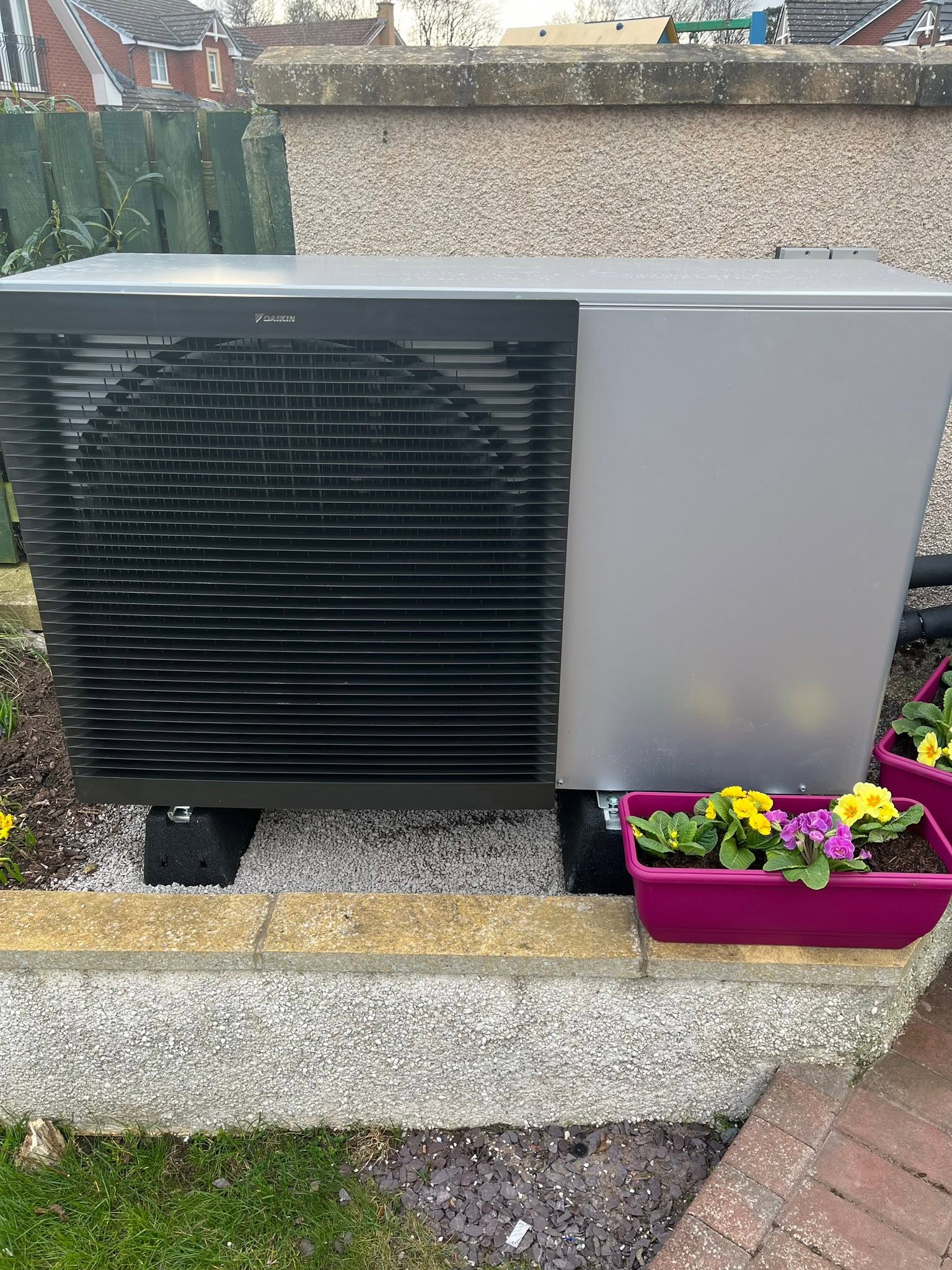
Designed for your property
What we’ll consider for your Livingston property
Livingston’s new-town neighbourhoods, later private estates and extended family homes create a wide range of fabric standards behind superficially similar elevations. Heating systems may also contain several generations of radiator and control upgrades.
For heat pump repairs and fault diagnosis, FLO considers access and the type of building in Livingston, alongside the exact fault code or symptom, what still operates and when the problem began. A safe initial assessment comes before promises about parts or attendance.
Livingston heat-pump fault help
Unpick legacy controls and later upgrades before assigning blame
Livingston homes often retain a mixture of original heating zones and later smart devices, replacement radiators or extensions. When the heat pump appears to fail, the active controller may not be the device you first check. FLO asks for photographs and names of every thermostat or programmer, along with the equipment code, affected functions and a timeline of recent work. Recording what still operates is as important as listing what does not. This information helps distinguish controls, distribution and appliance questions, although a remote review cannot guarantee the cause, replacement part, attendance time or outcome of a repair visit.
Identify the control that actually makes a change
List each wall thermostat, app, programmer and heat-pump controller, then note what happens when normal user adjustments are made. Do not access installer menus or factory-reset devices. Some Livingston homes retain redundant controls after renovations, and their screens can mislead without context. A simple control inventory lets FLO understand the operating chain and decide whether the next step should focus on communication, settings, hydraulic response or the heat-pump equipment itself.
Record the last normal day
Describe when heating and hot water last worked as expected, what schedules were running and what changed afterward. Include power cuts, holidays, building work or unusually cold weather as separate facts. This creates a baseline against which the displayed fault and current behaviour can be assessed. It is particularly helpful when several household members use different controls, because “it stopped yesterday” may otherwise refer to several different symptoms and times.
Show modifications across the whole property
Photograph relevant emitters or manifolds in a new extension as well as the main equipment, and state whether the issue is local to that area. Later building work may alter flow, controls or demand without changing the outdoor unit. The repair review can then avoid treating the property as an untouched example of its original new-town type. Any causal conclusion still requires inspection, but the evidence makes the investigation narrower and more proportionate.
Local planning information
Livingston includes both planned new-town housing and historic pockets
For fault help, the code and loss of heating come first; local access and equipment position then help FLO plan a realistic technical response.
Request help with a heat-pump fault in Livingston
Share the exact code or symptom, what still works and when the problem began. FLO will recommend the safest and most useful next step. FLO will confirm service availability for the Livingston postcode.
What this Livingston service includes
- System and fault-code review
- Heating and hot-water symptom capture
- Controls and operating-history questions
- On-site diagnosis where appropriate
- Clear repair or next-step recommendation
- Advice on safe interim actions
What the survey will check locally
FLO checks the building zone by zone, then designs one coherent operating strategy. Correct sizing, suitable emitters and weather-compensated controls matter more than simply choosing a familiar brand or matching the previous boiler output.
Outdoor siting is often achievable in a side or rear area, but access, drainage, boundaries and the indoor equipment route need measuring. The assessment also checks electrical capacity and the space needed for hot-water storage.
What happens next
- 01
Capture the symptoms
Share the make, model, error code, photos if available and whether heating or hot water has been lost.
- 02
Review the fault details
FLO reviews the information and confirms the safest, most useful next step.
- 03
Diagnose the fault
The engineer checks the relevant equipment and wider system rather than relying on the error code alone.
- 04
Agree the action
The findings, repair options and any follow-on work are explained before proceeding.
Related local services
Other heat pump help in Livingston
Nearby areas
FLO welcomes enquiries from Livingston, East Calder, Mid Calder, Uphall, Broxburn, West Calder and surrounding communities. The property postcode is used to confirm availability.
Answers that may help you decide
Questions people ask
Does FLO provide heat pump repairs and fault diagnosis in Livingston?+
FLO accepts enquiries for heat pump repairs and fault diagnosis in Livingston. Availability is confirmed using the postcode, system details and project scope.
What should I include in a Livingston enquiry?+
Provide the property type, current heating, postcode and contact details. Existing system owners should also include the make, model, age and any symptoms or fault codes.
Can an extended Livingston house keep its existing radiators?+
Some may be retained. The output of each emitter needs checking against room heat loss and the selected flow temperature.
How quickly can FLO confirm coverage?+
Send your postcode and project details with your quote request. FLO can then confirm the most useful next step and current survey availability.
What information should I send?+
Include the system make and model, fault code, symptoms, when it started, and any recent changes. Photographs of the controls and equipment can also help.
Should I reset the heat pump repeatedly?+
Avoid repeated resets or opening equipment. Follow the manufacturer’s user instructions and contact the installer or a qualified engineer if the fault returns.