
Service area
Edinburgh
Edinburgh and the Lothians · enter your postcode and we’ll confirm availability
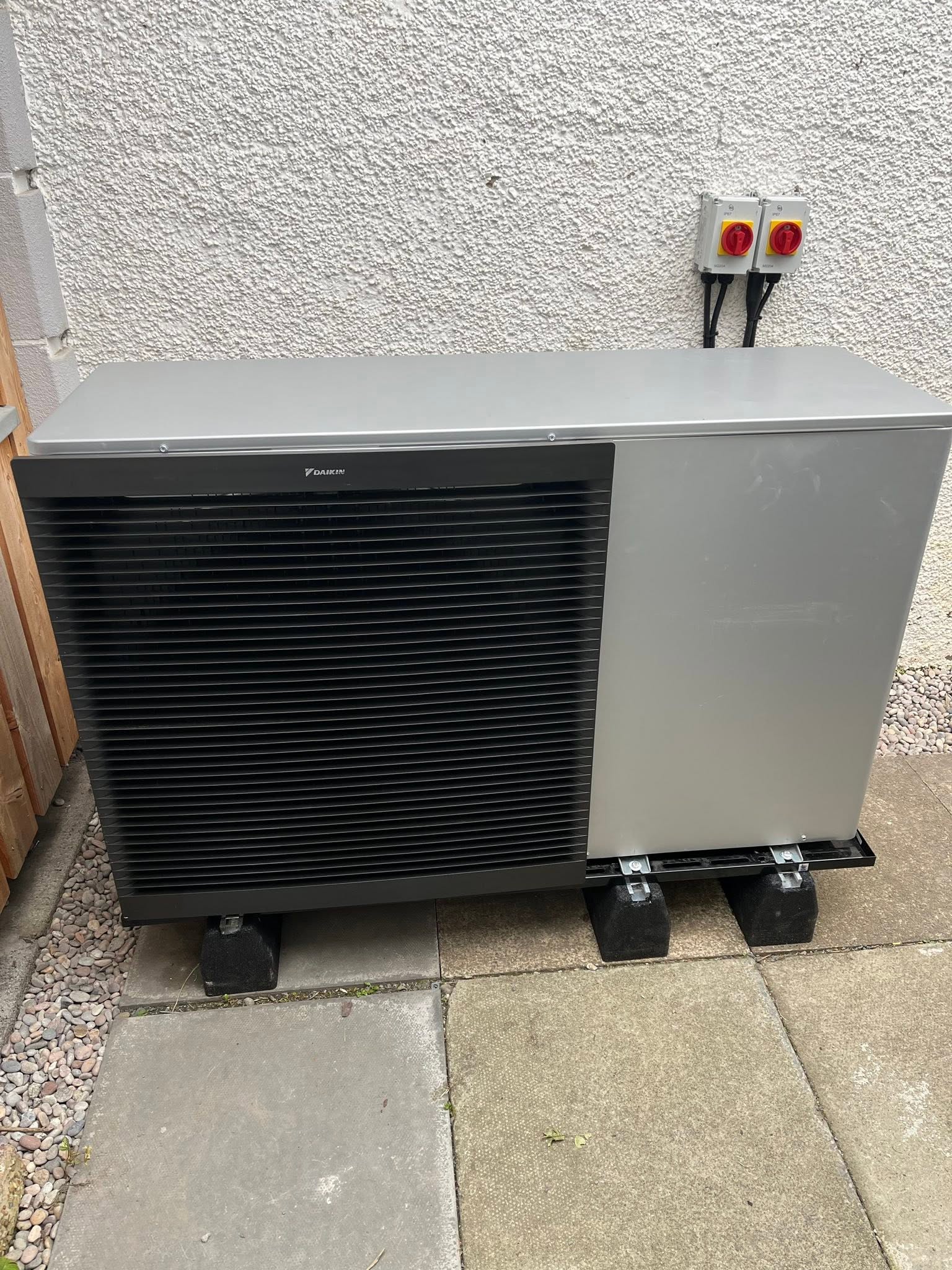
Designed for your property
What we’ll consider for your Edinburgh property
Edinburgh has Georgian and Victorian flats, stone terraces, villas, colony-style housing and extensive modern development. The practical question is often not simply whether a heat pump can meet the demand, but where equipment can be placed without compromising a listed frontage, shared access or limited internal space.
For heat pump radiators and hot-water cylinders, The useful first step is to establish whether low-temperature heating is practical for the property. FLO considers the fabric, emitters, hot-water demand, electrical supply and likely outdoor location before recommending a technical survey or final system.
Edinburgh emitter design where space, fabric and consent intersect
Resolve radiator output and cylinder access before an Edinburgh proposal is treated as complete
Edinburgh’s housing context changes the order in which a radiator and hot-water design should be developed. The City of Edinburgh Council reports that 66% of homes are flats and almost half pre-date 1945; the city also has 50 conservation areas. Those figures do not make an individual home unsuitable, but they explain why a generic emitter schedule and assumed airing-cupboard position are unreliable. A traditional stone room, roof-level flat, colony home and modern edge-of-city house can have different heat-loss patterns even at similar floor areas. FLO can measure the distribution system, assess radiator output at the intended operating conditions, and test cylinder position, delivery access and pipe routes against the exact property. Planning or title questions remain separate from engineering, yet they need to be visible early when external or common parts affect the proposed solution.
Historic rooms need individual outputs, not one age-based factor
A Georgian or Victorian Edinburgh property may include original masonry, repaired sash windows, secondary glazing, insulated roof rooms and a modern rear alteration. Applying one building-age assumption across those spaces can produce an unhelpful radiator list. During your survey, FLO will establish each room’s dimensions, exposed elements, fabric assumptions and required output, then record the existing emitter accurately. This reveals whether an apparently small radiator is genuinely limiting, whether a large traditional emitter may remain useful, and where a targeted change supports the proposed system temperature. Decorative cabinets, deep window reveals and furniture positions can affect real heat delivery and will be recorded rather than ignored. FLO can place those room decisions in the written scope without claiming that every heritage property needs oversized radiators or that fabric improvements already exist when they have not been verified.
A cylinder proposal must survive the stair and cupboard test
Finding theoretical floor area on a plan is not the same as establishing a serviceable cylinder position. Edinburgh flats and subdivided buildings can have narrow stairs, shared entrances, restricted doors and cupboards shaped by earlier conversions. Before a particular store is specified, the route into the property, unit dimensions, working clearance, valves, drainage provisions and future replacement access need consideration. Household demand still leads the capacity discussion: number of regular occupants, bathroom fittings, peak-use pattern and desired recovery all matter. A house with several bathrooms and a compact flat with one shower should not inherit the same assumption from bedroom count. If more than one location is plausible, the proposal can compare pipe length, lost storage and disruption, giving the customer a transparent decision instead of a cylinder appearing late as an unexplained extra.
Shared ownership can reach inside the system route
Radiator and cylinder work may appear entirely internal, yet the practical route can cross common fabric or depend on an external connection controlled with others. In an Edinburgh flat, the title, factor or co-owner position may therefore affect where pipes can pass and where maintenance can occur. That issue should be identified without confusing it with planning permission: listed status, conservation controls, title rights and engineering suitability are distinct checks. FLO can mark the assumed route and any dependency in the survey record, then keep the emitter design useful even while consent is being clarified. For a suburban house, the same discipline applies in a simpler form—confirm floor construction, vertical routes and plant access before finalising changes. The goal is a heating-distribution schedule that can actually be installed, commissioned and maintained in the specific Edinburgh building.
Local planning information
Edinburgh’s housing mix changes the order of the checks
For radiators and hot water, local building types help identify likely construction, access and plant-space questions; final emitter output and cylinder duty still come from measurements and household demand.
Request a £0 whole-heating-system survey and written quote in Edinburgh
Share the property and present-system details so FLO can review room output, selective upgrades, pipework and cylinder recovery as one heating system. FLO will confirm service availability for the Edinburgh postcode.
What this Edinburgh service includes
- Room-by-room radiator output checks
- Selective emitter resizing
- Pipework and flow-rate assessment
- Cylinder capacity and recovery review
- Plant-space and access planning
- Controls and balancing at handover
What the survey will check locally
Older stone homes need careful assumptions for heat loss and ventilation, while renovated properties may contain several fabric standards within one envelope. FLO checks room demand and emitter output together so an attractive EPC or recent refurbishment does not substitute for the actual heating design.
Conservation status, flats, visible elevations and neighbour proximity can affect whether a proposed installation is practical. The survey records potential locations, pipe routes and permissions early, before equipment is finalised.
What happens next
- 01
Measure room demand
Use the heat-loss calculation to establish the output required from each emitter.
- 02
Check existing equipment
Compare radiator, pipework and cylinder performance with the proposed heat-pump design.
- 03
Specify necessary changes
Retain suitable components and clearly identify only the upgrades the system requires.
- 04
Balance and explain
Commission the distribution system and show the homeowner how the controls should be used.
Related local services
Other heat pump help in Edinburgh
Nearby areas
FLO welcomes enquiries from Musselburgh, Dalkeith, South Queensferry, Currie, Penicuik, Bonnyrigg and surrounding communities. The property postcode is used to confirm availability.
Answers that may help you decide
Questions people ask
Does FLO provide heat pump radiators and hot-water cylinders in Edinburgh?+
FLO accepts enquiries for heat pump radiators and hot-water cylinders in Edinburgh. Availability is confirmed using the postcode, system details and project scope.
What should I include in an Edinburgh enquiry?+
Provide the property type, current heating, postcode and contact details. Existing system owners should also include the make, model, age and any symptoms or fault codes.
Do conservation areas rule out heat pumps in Edinburgh?+
Not automatically. Position, visibility, listing status and the specific planning conditions matter. The local authority should be consulted where the permitted-development conditions are not clearly met.
Can FLO quote for an Edinburgh flat?+
FLO can review the enquiry, but flats need more early information about ownership, outdoor space, access and existing hot-water arrangements than a typical house.
Do heat pumps need oversized radiators?+
They often need more emitter output than a high-temperature boiler system, but the requirement is calculated room by room. Not every radiator automatically needs replacement.
Can I keep my existing hot-water cylinder?+
Some cylinders may not have a suitable heat-exchanger area or recovery performance. The design should check this along with available space and household demand.