
Service area
Bearsden and Milngavie
East Dunbartonshire · enter your postcode and we’ll confirm availability
Designed for your property
What we’ll consider for your Bearsden and Milngavie property
Bearsden and Milngavie contain substantial stone villas, interwar houses, bungalows, modern estates and homes extended more than once. Mixed construction, large glazed spaces and high hot-water use can make a boiler-size shortcut especially misleading.
For heat pump controls and aftercare, FLO relates the customer's temperatures, schedules and comfort issue to the installed system and the type of building. That helps separate a settings question from a hydraulic, emitter or wider performance problem.
Bearsden and Milngavie aftercare for large, multi-zone homes
Make complex controls simpler without flattening every room into one schedule
Bearsden and Milngavie include stone villas, interwar houses, bungalows, modern estates and properties extended more than once. Controls in these homes can span several floors, mixed emitters, underfloor zones, smart-home layers and substantial hot-water demand. FLO’s aftercare review reconstructs how the arrangement is meant to work before suggesting change. The household identifies its occupied zones, reference sensors, normal timetable and recurring comfort differences. Mature gardens, historic designations and external siting remain relevant to physical work, but the control conversation is based on the installed system and observed response rather than an assumption about house size or value.
Give each floor and extension a defined role
A large villa or repeatedly remodelled family house can contain bedrooms used intermittently, a main living floor, a glazed addition and perhaps an underfloor-heated kitchen. If every thermostat follows an independent schedule, the heat pump can receive conflicting demand while active emitter area changes throughout the day. FLO can map the zones and explain which control is primary, which devices trim individual spaces and how the weather-compensated target supports the whole distribution system. This does not require all rooms to be identical. It requires the differences to be intentional and compatible with hydraulic design. If one floor remains cool only when other zones close, the evidence points beyond a simple temperature preference. A controls or system assessment can then address pumps, valves, balance or emitter output instead of raising the curve for the entire house.
Coordinate smart-home convenience with heat-pump stability
Automation can reflect presence, tariffs and room use, but rapid on-off commands designed around a boiler may undermine steady heat-pump operation. FLO can review the app schedules and hardware that sit between the household and the manufacturer controller. Tell us which platform actually switches demand, whether radiator valves close together and what happens after an away or night mode ends. Logos and marketing claims do not confirm compatibility; where wiring and minimum-flow consequences are uncertain, professional inspection is required. A sensible outcome may retain useful automation while simplifying overlapping schedules and documenting a stable fallback.
Treat several bathrooms as a demand pattern, not a bigger target
Substantial homes can have simultaneous showers, baths, guests and changing occupancy, so domestic-hot-water aftercare needs more than a cylinder temperature discussion. FLO can record when demand peaks, the programmed heating periods, use of boost, recovery experience and any priority setting visible to the user. The space-heating schedule remains separate: changing the weather curve will not create more stored water, and repeatedly raising the cylinder target may not address capacity or sensor problems. If everyday use was not captured in the original design, a hot-water assessment may be more honest than ongoing schedule adjustment. The aftercare plan defines normal operation, an exceptional-use method supported by the manufacturer instructions and the point at which service or design review is needed. No universal setting is inferred from the number of bathrooms alone.
Local planning information
The area includes several distinct historic designations
For controls and aftercare, the evidence helps distinguish building response, access and local installation constraints from controller settings or a technical fault in the system itself.
Request a controls and comfort review in Bearsden and Milngavie
Describe the controls, temperatures, schedules and comfort issue so FLO can distinguish settings support from a wider system diagnosis. FLO will confirm service availability for the Bearsden and Milngavie postcode.
What this Bearsden and Milngavie service includes
- Controls and schedule walkthrough
- Weather-compensation explanation
- Comfort and temperature review
- Operating-pattern discussion
- Handover and documentation support
- Servicing or fault diagnosis when needed
What the survey will check locally
FLO breaks the demand down room by room and checks which emitters can support an efficient flow temperature. Cylinder recovery, controls and the way occupied areas are used are considered alongside output, rather than being added after the heat pump is chosen.
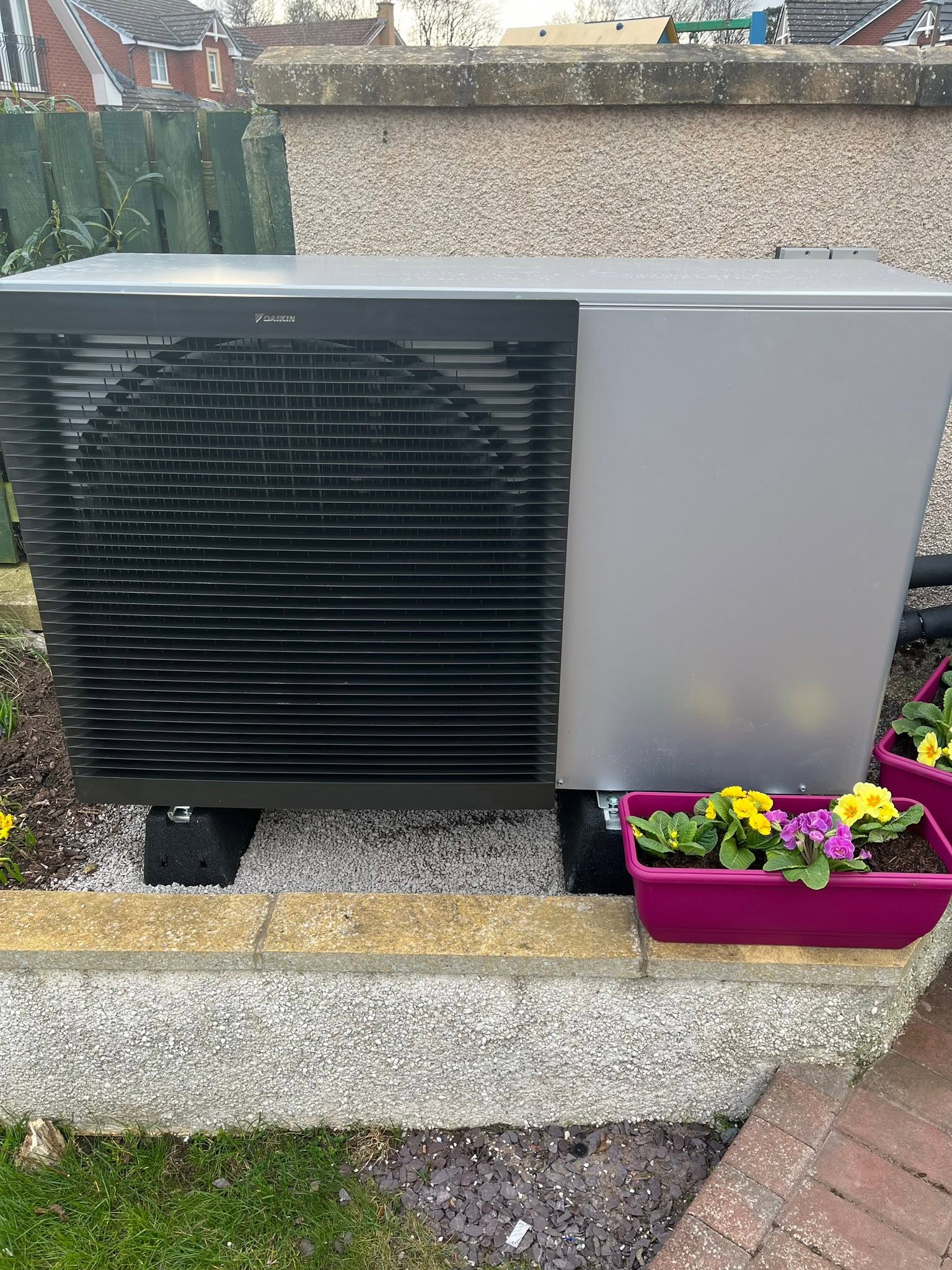
Mature gardens and carefully finished exteriors create a legitimate design constraint. A discreet position still needs airflow, drainage, short sensible pipework and safe service access throughout the equipment’s life.
What happens next
- 01
Describe the concern
Explain what feels wrong: comfort, schedules, hot water, noise, bills or an unfamiliar control message.
- 02
Review the operation
The team considers the system type, settings and behaviour alongside the household’s expectations.
- 03
Make deliberate changes
Any adjustment should have a clear purpose and enough time to assess its effect.
- 04
Escalate when required
Physical faults or performance concerns can move into servicing or technical diagnosis.
Related local services
Other heat pump help in Bearsden and Milngavie
Nearby areas
FLO welcomes enquiries from Bearsden, Milngavie, Kessington, Baljaffray, Mugdock, Strathblane and surrounding communities. The property postcode is used to confirm availability.
Answers that may help you decide
Questions people ask
Does FLO provide heat pump controls and aftercare in Bearsden and Milngavie?+
FLO accepts enquiries for heat pump controls and aftercare in Bearsden and Milngavie. Availability is confirmed using the postcode, system details and project scope.
What should I include in a Bearsden and Milngavie enquiry?+
Provide the property type, current heating, postcode and contact details. Existing system owners should also include the make, model, age and any symptoms or fault codes.
Can a large Bearsden villa use a heat pump?+
It may be suitable, but a larger home needs careful heat-loss, emitter, hot-water and electrical design rather than simply a larger outdoor unit.
Will the outdoor unit spoil a landscaped garden?+
Position and finish can be planned thoughtfully, but airflow, sound, drainage and service clearance must remain the priorities.
Should I switch my heat pump off overnight?+
Many systems are designed to maintain comfort steadily rather than recover from large temperature drops. The right schedule depends on the property and system design.
What is weather compensation?+
It adjusts heating-water temperature in response to outdoor conditions so the system can provide enough heat without running hotter than necessary.