
Service area
Falkirk
Falkirk and the Forth Valley · enter your postcode and we’ll confirm availability
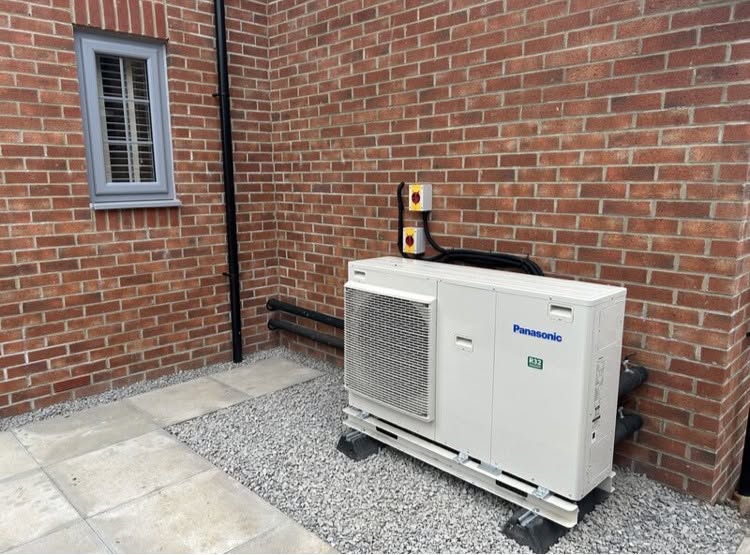
Designed for your property
What we’ll consider for your Falkirk property
Falkirk and the Forth Valley include terraces, bungalows, estate housing, villages and rural-edge properties. Many homes have been altered in stages, leaving a mixture of original pipework, upgraded rooms and emitters selected for a boiler rather than low-temperature operation.
For heat pump controls and aftercare, FLO relates the customer's temperatures, schedules and comfort issue to the installed system and the type of building. That helps separate a settings question from a hydraulic, emitter or wider performance problem.
Falkirk controls support for changing fuels and altered homes
Build a Falkirk operating plan from the present system, not its old heating label
Falkirk and the Forth Valley include terraces, bungalows, estate houses, newer developments and villages whose heating infrastructure has changed. An old description such as “off gas” does not reveal what now serves the address, and it cannot explain how the current controls were commissioned. FLO records the heat-pump make, emitters, zones, present fuel history, controller and household timetable. This prevents boiler-era habits, inherited smart controls or later extensions from being treated as invisible. User guidance is based on the installed arrangement, while suspected wiring, flow or equipment issues are sent to a technical route.
Start with today’s heat source and every surviving control
A Falkirk property may have moved from gas, oil, direct electric or another wet-electric arrangement, with old thermostats or programmers still visible after the change. Their presence does not prove they remain active. FLO can ask the homeowner to photograph each device, identify what responds when it is adjusted and locate the main heat-pump user controller from the handover pack. Unused equipment can then be distinguished from live zone controls without inviting the customer to disconnect anything. This inventory is especially important in inherited systems where the person seeking help did not receive the original explanation. It creates a reliable foundation for discussing schedules and targets, and it highlights unresolved wiring or integration questions that require an engineer rather than another sequence of button presses.
Treat bungalow rooms and later additions as different signals
Single-storey layouts can appear simple, yet a rear extension, converted loft area or conservatory replacement may sit on a different branch or thermostat. In Falkirk family homes, the room holding the main sensor might also receive strong sun or supplementary heat and stop demand before a cooler room is satisfied. FLO reviews sensor location, radiator-valve positions and the timing of each zone against the reported comfort map. A global temperature increase is not the first answer if only one area struggles. The household can record when the affected room falls behind and whether other spaces overshoot. If those observations point to hydraulic balance, inadequate emitter output or a construction difference, aftercare can recommend the relevant assessment without claiming the control interface can solve a physical mismatch.
Give the owner a baseline that survives future changes
Settings often become difficult to interpret after several small adjustments by different occupants, installers or other trades. FLO can help reconstruct a documented baseline from commissioning material, current screens and the household’s preferred comfort periods. Space-heating schedule, setback, weather-compensation behaviour and hot-water timing are recorded separately. Subsequent experiments should have a stated purpose, a single variable and a review date, so the effect is not lost among simultaneous changes. This is useful in a Falkirk property expecting further insulation, an extension or occupancy change: the old record shows what applied before work, while a fresh review can address the new building conditions. It is not a promise that original settings remain correct forever, but a practical way to replace guesswork with an accountable operating history.
Local planning information
Historic fuel labels are not reliable enough for the enquiry
For controls and aftercare, the evidence helps distinguish building response, access and local installation constraints from controller settings or a technical fault in the system itself.
Request a controls and comfort review in Falkirk
Describe the controls, temperatures, schedules and comfort issue so FLO can distinguish settings support from a wider system diagnosis. FLO will confirm service availability for the Falkirk postcode.
What this Falkirk service includes
- Controls and schedule walkthrough
- Weather-compensation explanation
- Comfort and temperature review
- Operating-pattern discussion
- Handover and documentation support
- Servicing or fault diagnosis when needed
What the survey will check locally
FLO separates the building demand from the capacity of the existing distribution system. That shows whether selective radiator changes, a pipework improvement or a different flow-temperature strategy is needed before equipment is chosen.
Outdoor space may be compact even where indoor floor area is generous. Unit clearances, boundaries, drainage, cable routes and cylinder space are documented together so the quote describes the complete job.
What happens next
- 01
Describe the concern
Explain what feels wrong: comfort, schedules, hot water, noise, bills or an unfamiliar control message.
- 02
Review the operation
The team considers the system type, settings and behaviour alongside the household’s expectations.
- 03
Make deliberate changes
Any adjustment should have a clear purpose and enough time to assess its effect.
- 04
Escalate when required
Physical faults or performance concerns can move into servicing or technical diagnosis.
Related local services
Other heat pump help in Falkirk
Nearby areas
FLO welcomes enquiries from Grangemouth, Larbert, Denny, Bonnybridge, Bo’ness, Polmont and surrounding communities. The property postcode is used to confirm availability.
Answers that may help you decide
Questions people ask
Does FLO provide heat pump controls and aftercare in Falkirk?+
FLO accepts enquiries for heat pump controls and aftercare in Falkirk. Availability is confirmed using the postcode, system details and project scope.
What should I include in a Falkirk enquiry?+
Provide the property type, current heating, postcode and contact details. Existing system owners should also include the make, model, age and any symptoms or fault codes.
How do I compare heat pump quotes in Falkirk?+
Compare the design heat loss, proposed flow temperature, emitter schedule, hot-water plan, electrical work, controls, commissioning and exclusions—not only the outdoor unit and total price.
Can a bungalow use a heat pump?+
Often yes. Floor area, fabric, emitters, pipework and hot-water needs determine the design; being a bungalow is not itself a barrier.
Should I switch my heat pump off overnight?+
Many systems are designed to maintain comfort steadily rather than recover from large temperature drops. The right schedule depends on the property and system design.
What is weather compensation?+
It adjusts heating-water temperature in response to outdoor conditions so the system can provide enough heat without running hotter than necessary.