
Service area
Falkirk
Falkirk and the Forth Valley · enter your postcode and we’ll confirm availability
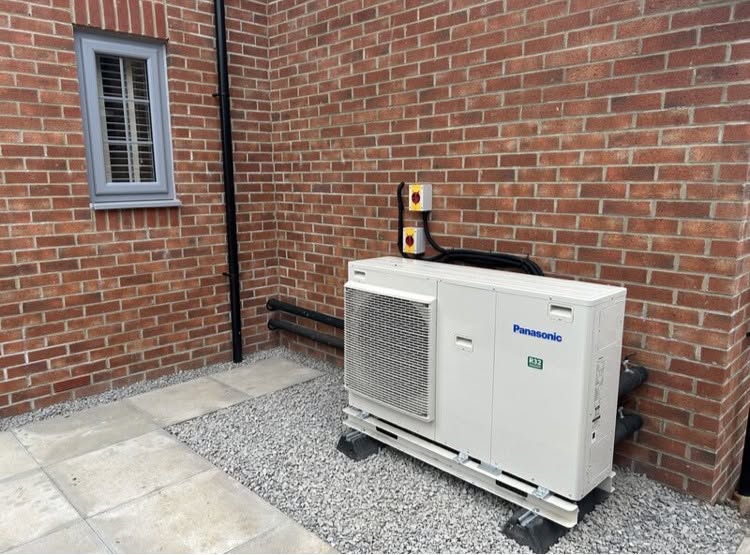
Designed for your property
What we’ll consider for your Falkirk property
Falkirk and the Forth Valley include terraces, bungalows, estate housing, villages and rural-edge properties. Many homes have been altered in stages, leaving a mixture of original pipework, upgraded rooms and emitters selected for a boiler rather than low-temperature operation.
For commercial heat pump projects, FLO considers the building, local planning requirements and access alongside the site's working hours, heat and hot-water demand, existing plant, electrical headroom, delivery route and project phasing. The study begins with the operation, not a domestic package or a boiler nameplate.
Falkirk commercial surveys based on present infrastructure
Verify today’s fuel, distribution and site access instead of relying on an old area label
A Falkirk commercial heat-pump assessment should record what exists at the individual premises before drawing conclusions from its village, estate or town name. Falkirk Council notes that gas infrastructure was completed in several previously off-gas villages, while other villages received electric low-carbon systems; that history shows why inherited labels are unreliable. A business site may also have been extended, rezoned or placed under new controls without its heat distribution being redesigned as one system. Feasibility therefore starts with current meters, plant, operating temperatures, occupancy and hot-water use, followed by electricity and access. Compact town positions, suburban plots and rural-edge premises create different sound and delivery constraints. A credible output sets out the evidence, enabling works and operational sequence behind each option rather than presenting a like-for-like boiler replacement.
Trace the fuel and circuits that serve the premises now
During your survey, FLO will verify every active heat source, meter, circuit and control rather than assume the whole building follows the local network history. Gas, direct electric, wet electric or other arrangements can leave different emitters, storage and electrical demands, while later extensions may have been attached to the easiest available circuit. Energy records are matched to opening hours and weather, and measured temperatures show what the distribution actually requires. If several systems coexist, the appraisal can compare a single conversion with a zoned or phased strategy. This check prevents investment decisions from being based on a historic off-gas description or on the rated output of plant that no longer reflects current use.
Fit plant into town constraints or rural-edge operations
A compact Falkirk property may put outdoor equipment close to public routes, adjoining windows or narrow service access. A rural-edge site may have more ground but longer hydraulic and electrical runs, greater exposure or working yards that cannot be obstructed. Each possible position needs a measured route for delivery, airflow, drainage, acoustic treatment, security and future component replacement. Screens and compounds must preserve clearance and avoid recirculation. The review should also identify whether cranes, temporary closures or work outside trading hours are realistic. Comparing the normal operation of the site with installation and maintenance needs avoids selecting a position that works only on a clean drawing.
Check conservation context and shutdown sequence together
Falkirk Council identifies nine conservation areas, including Bo’ness Town Centre, Arnothill and Dollar Park, Falkirk Town Centre and Grange Terrace. That does not make every proposal in those places unacceptable, but the exact address, elevation and external works must be established before bases or service routes are fixed. At the same time, the business needs a transition plan for electrical upgrades, distribution cleaning, emitter work, controls and final changeover. Planning, owner approvals and operational windows should sit on one dependency schedule. If temporary or retained heat is required, its capacity, controls and removal point should be explicit, so continuity is protected without allowing an undefined backup arrangement to become permanent.
Local planning information
Historic fuel labels are not reliable enough for the enquiry
For a commercial site, local planning is considered alongside demand, existing plant, electrical capacity, operating hours and delivery phasing.
Request a commercial heat-pump project review in Falkirk
Share the demand, existing plant, operating hours, project stage and constraints so FLO can understand the project and advise what happens next. FLO will confirm service availability for the Falkirk postcode.
What this Falkirk service includes
- Site and demand assessment
- Existing plant and distribution review
- Operating-temperature strategy
- Electrical and space planning
- Phased upgrade and disruption planning
- Installation, commissioning and support
What the survey will check locally
FLO separates the building demand from the capacity of the existing distribution system. That shows whether selective radiator changes, a pipework improvement or a different flow-temperature strategy is needed before equipment is chosen.
Outdoor space may be compact even where indoor floor area is generous. Unit clearances, boundaries, drainage, cable routes and cylinder space are documented together so the quote describes the complete job.
What happens next
- 01
Technical discovery
Establish building use, demand, existing plant, constraints, objectives and decision timescale.
- 02
Site assessment
Inspect the distribution system, plant space, electrical capacity, access and potential equipment locations.
- 03
Options and phasing
Compare practical system routes, dependencies and any staged delivery required.
- 04
Delivery and support
Plan installation, commissioning, controls, handover and ongoing maintenance around the operation.
Related local services
Other heat pump help in Falkirk
Nearby areas
FLO welcomes enquiries from Grangemouth, Larbert, Denny, Bonnybridge, Bo’ness, Polmont and surrounding communities. The property postcode is used to confirm availability.
Answers that may help you decide
Questions people ask
Does FLO provide commercial heat pump projects in Falkirk?+
FLO accepts enquiries for commercial heat pump projects in Falkirk. Availability is confirmed using the postcode, system details and project scope.
What should I include in a Falkirk enquiry?+
Provide the property type, current heating, postcode and contact details. Existing system owners should also include the make, model, age and any symptoms or fault codes.
How do I compare heat pump quotes in Falkirk?+
Compare the design heat loss, proposed flow temperature, emitter schedule, hot-water plan, electrical work, controls, commissioning and exclusions—not only the outdoor unit and total price.
Can a bungalow use a heat pump?+
Often yes. Floor area, fabric, emitters, pipework and hot-water needs determine the design; being a bungalow is not itself a barrier.
Can a heat pump replace existing commercial boilers?+
Sometimes, but the existing temperatures, peak demand, emitters, controls and resilience requirements must be assessed before choosing a replacement strategy.
Can a project be phased?+
Yes. Phasing may be appropriate where fabric, emitters, electrical work or operational constraints prevent a single-stage change.